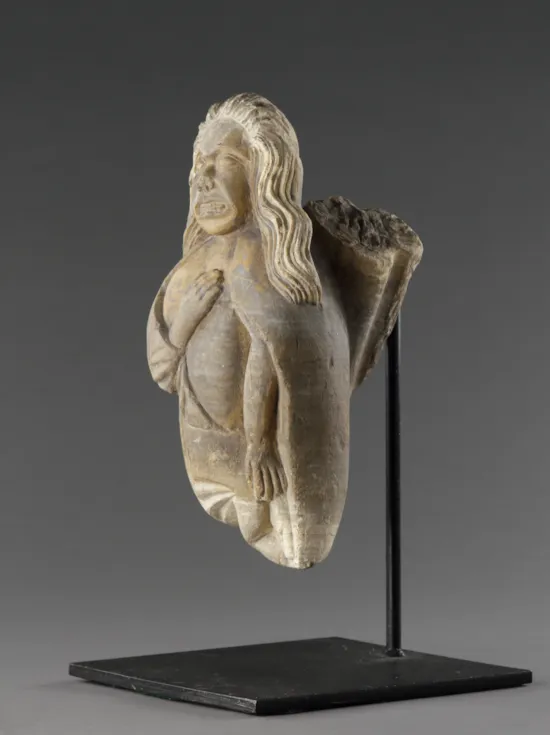
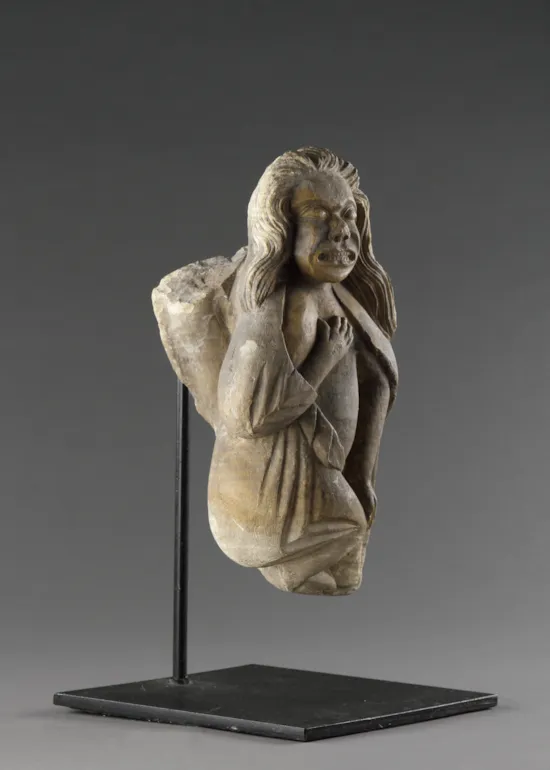
A Powerfully Carved Corbel (Label Stop or Hood Mould)
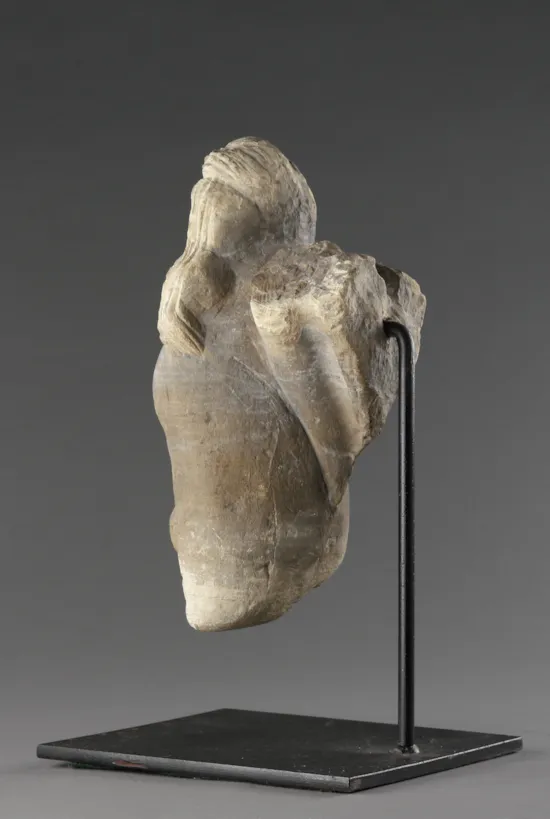
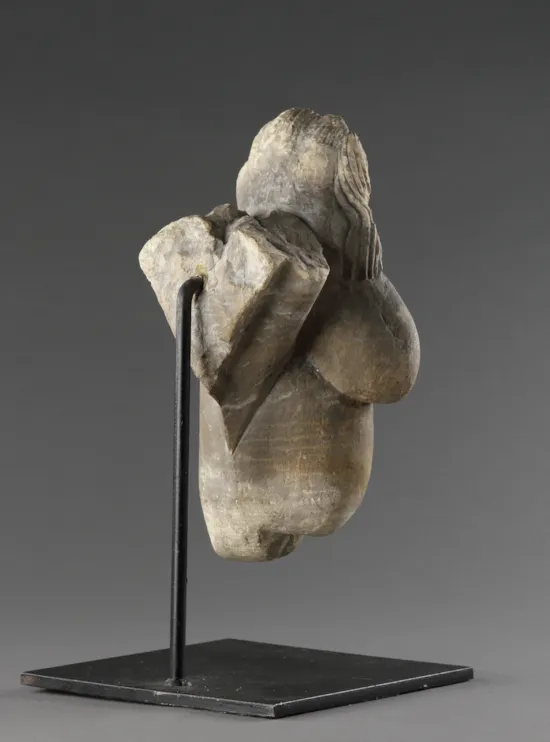
A Powerfully Carved Corbel (Label Stop or Hood Mould)
Depicting Asenath, wife of Joseph, daughter of Potiphera
York-Stone
England
14th Century / Circa 1320 - 40
Size: 37cm high - 14½ ins high
Depicting Asenath, wife of Joseph, daughter of Potiphera
York-Stone
England
14th Century / Circa 1320 - 40
Size: 37cm high - 14½ ins high
A Powerfully Carved Corbel (Label Stop or Hood Mould)
Depicting Asenath, wife of Joseph, daughter of Potiphera
York-Stone
England
14th Century / Circa 1320 - 40
Depicting Asenath, wife of Joseph, daughter of Potiphera
York-Stone
England
14th Century / Circa 1320 - 40
Asenath, a high-ranking, aristocratic Egyptian woman, appears as a minor character in the Book of Genesis. She was the wife of Joseph and the mother of his sons, Manasseh and Ephraim. There are two distinct Rabbinic interpretations of Asenath. One perspective posits that she was an Egyptian woman who converted to marry Joseph. This viewpoint implies that she had already embraced God prior to their union and subsequently raised her sons in the principles of Judaism. According to the Hebrew Bible, Asenath’s father, Potiphera, a priest of the ancient Egyptian city of On, is mentioned in Genesis 41:45 and 41:50. Potiphera was the father of Asenath, who was presented to Joseph as his wife by the Pharaoh. Her name, which translates to ‘he whom Ra has given’, signifies her divine origin.
Ex Beverley Minster, Yorkshire
By family descent
Ex Private collection
cf: Removed from Beverley Minster during the late 19th-century restoration work undertaken by George Gilbert-Scott. Originally situated in the high North or South aisles at the vault’s termination, it was reported that nine figures were removed. This example was retained by the stone mason responsible for the masonry work and subsequently passed down through his family.
By family descent
Ex Private collection
cf: Removed from Beverley Minster during the late 19th-century restoration work undertaken by George Gilbert-Scott. Originally situated in the high North or South aisles at the vault’s termination, it was reported that nine figures were removed. This example was retained by the stone mason responsible for the masonry work and subsequently passed down through his family.
A Powerfully Carved Corbel (Label Stop or Hood Mould)


YOU MAY ALSO LIKE