A Superb Pipe-Case ‘Musozutsu’
A Superb Pipe-Case ‘Musozutsu’
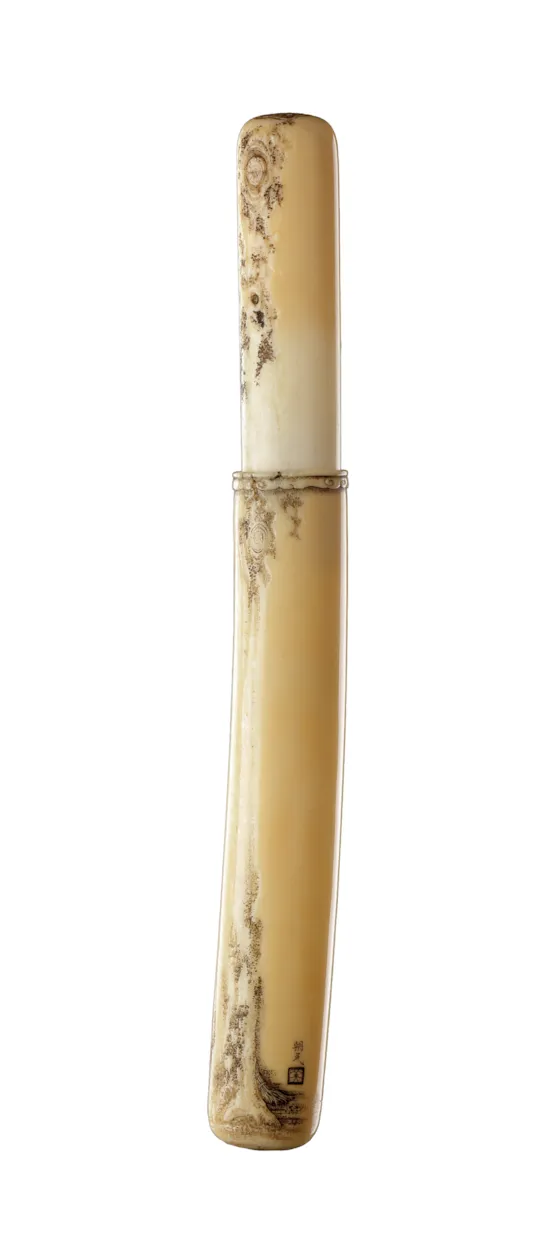
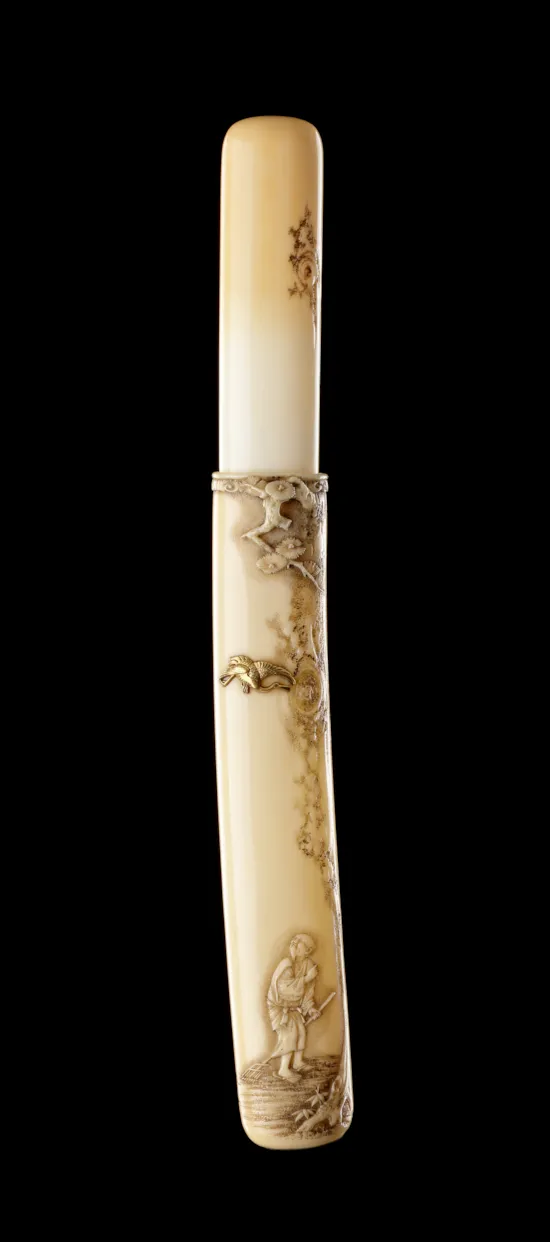
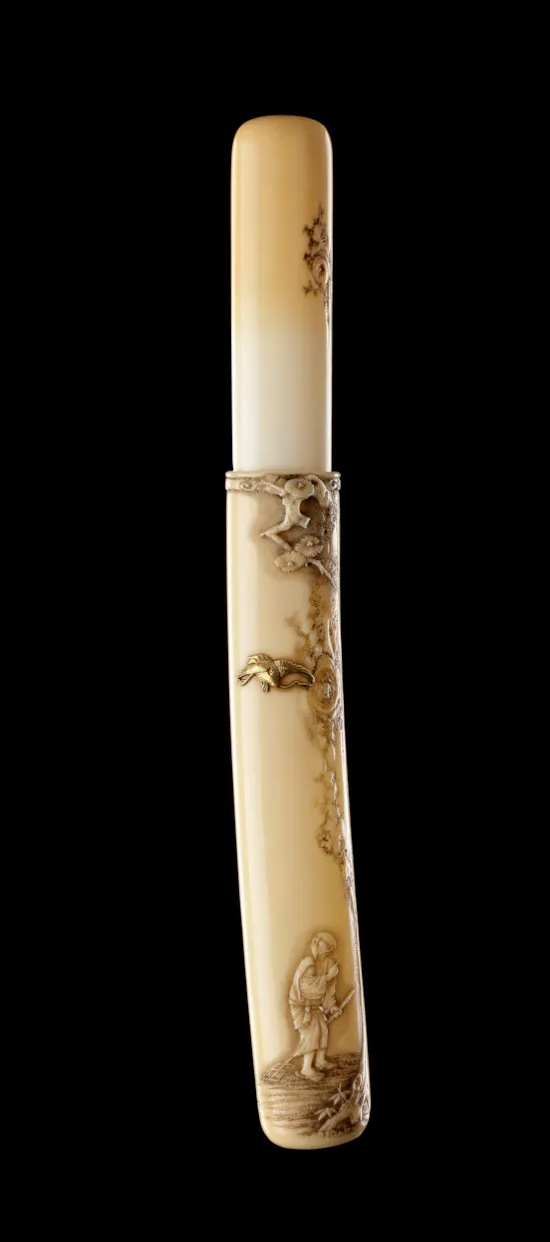
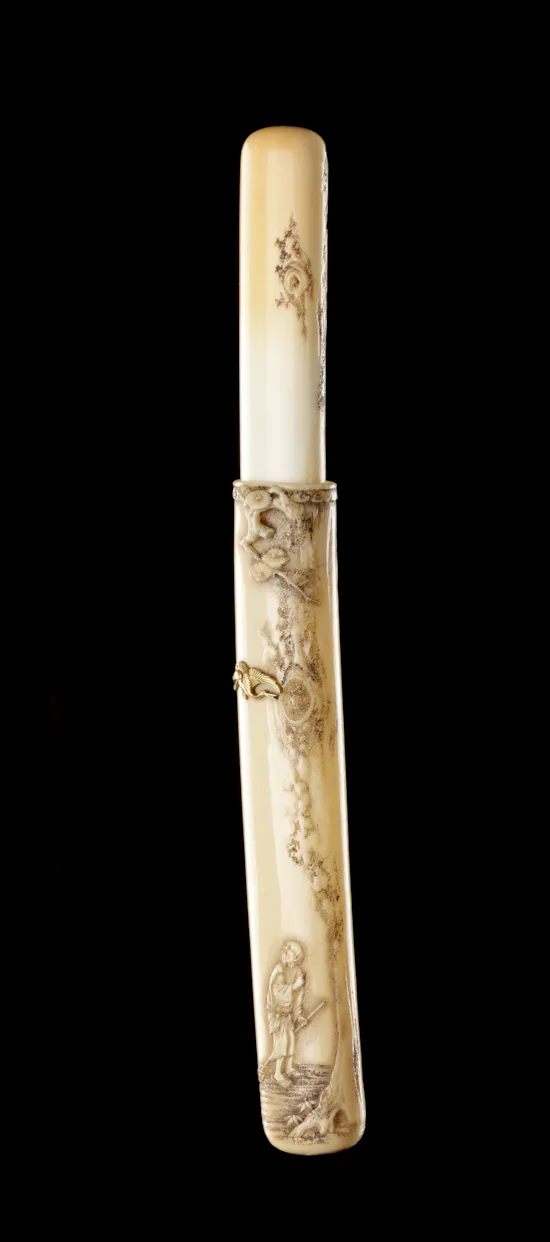
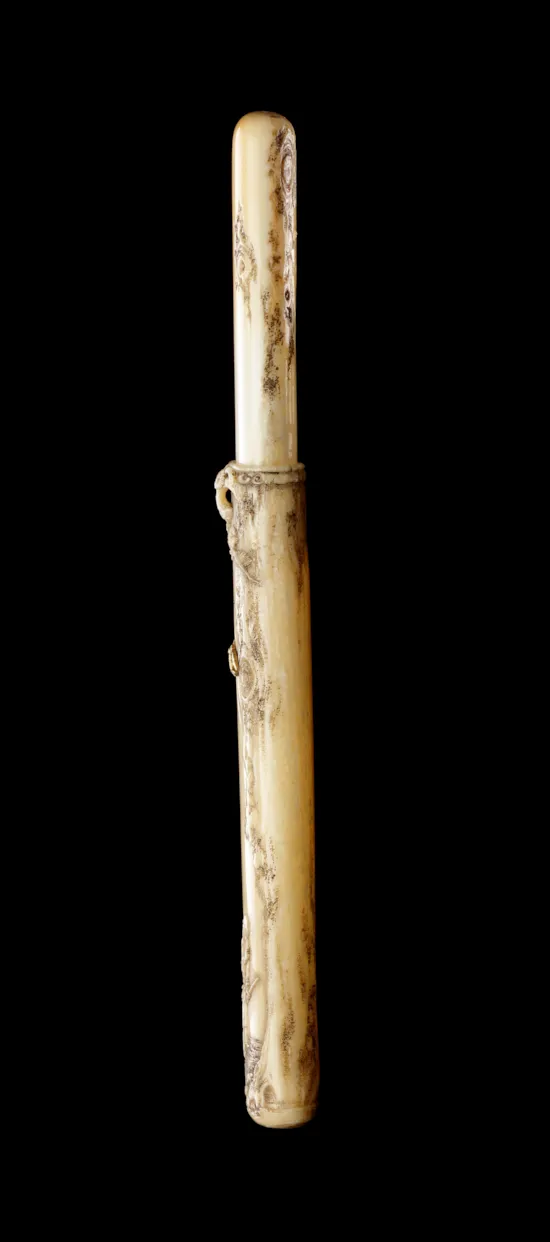
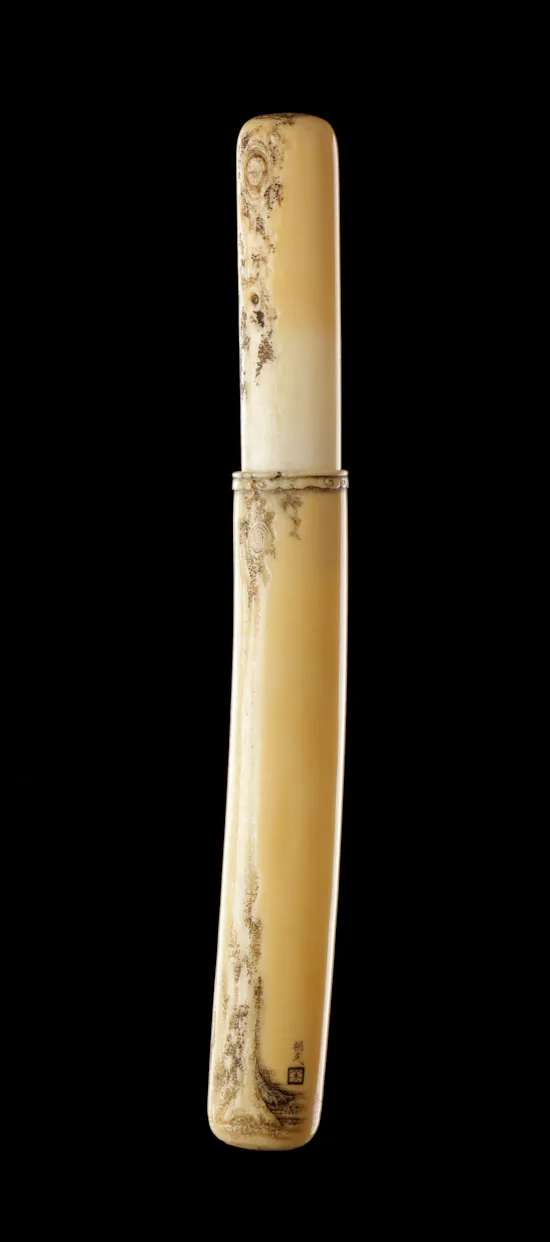
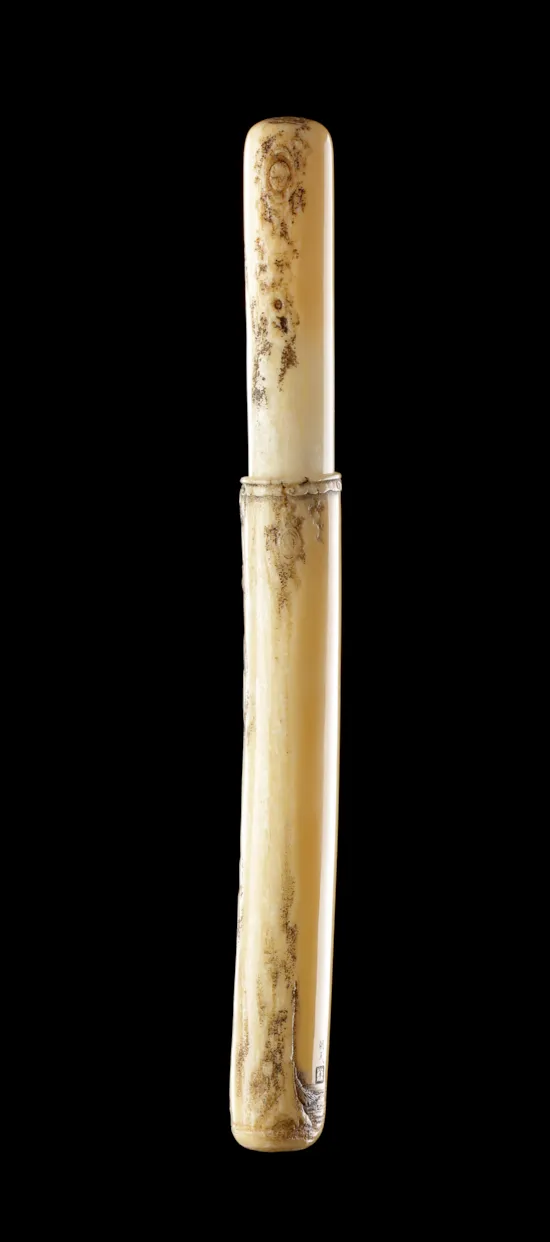
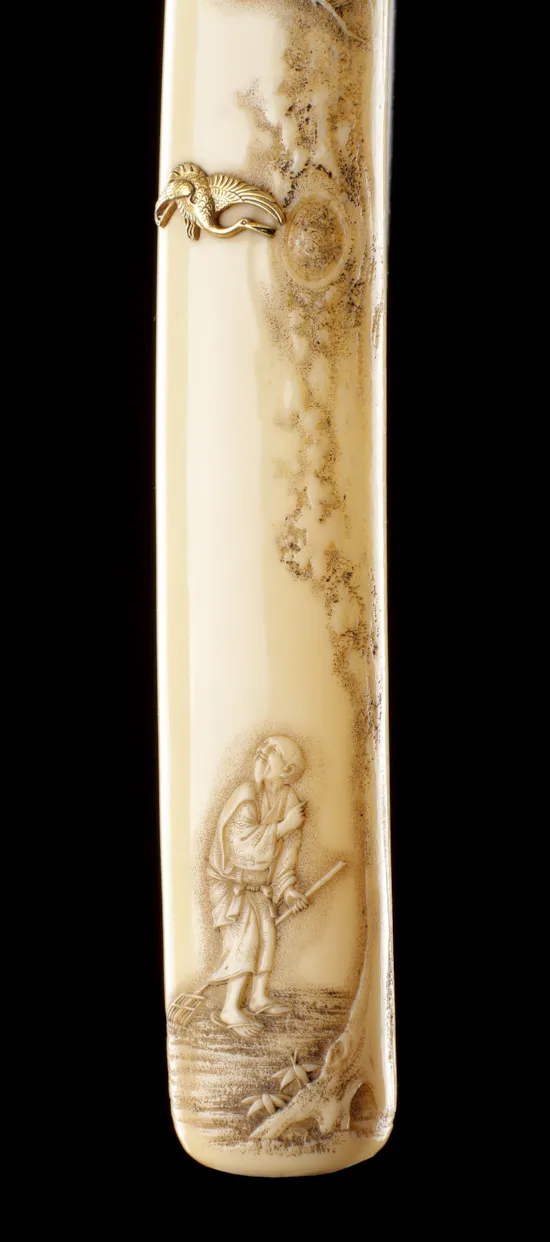
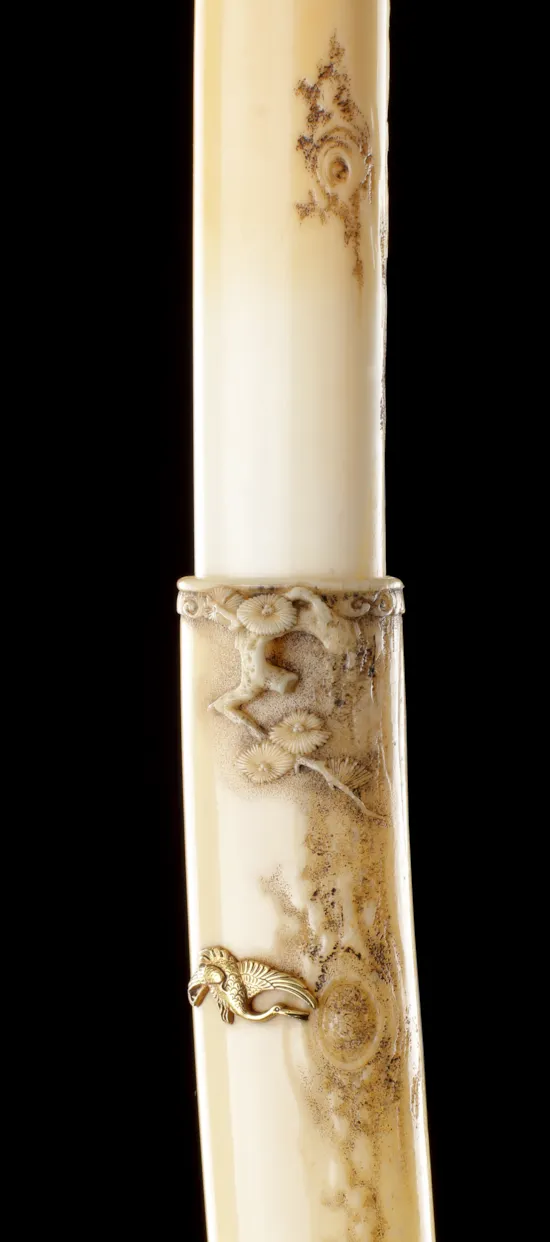
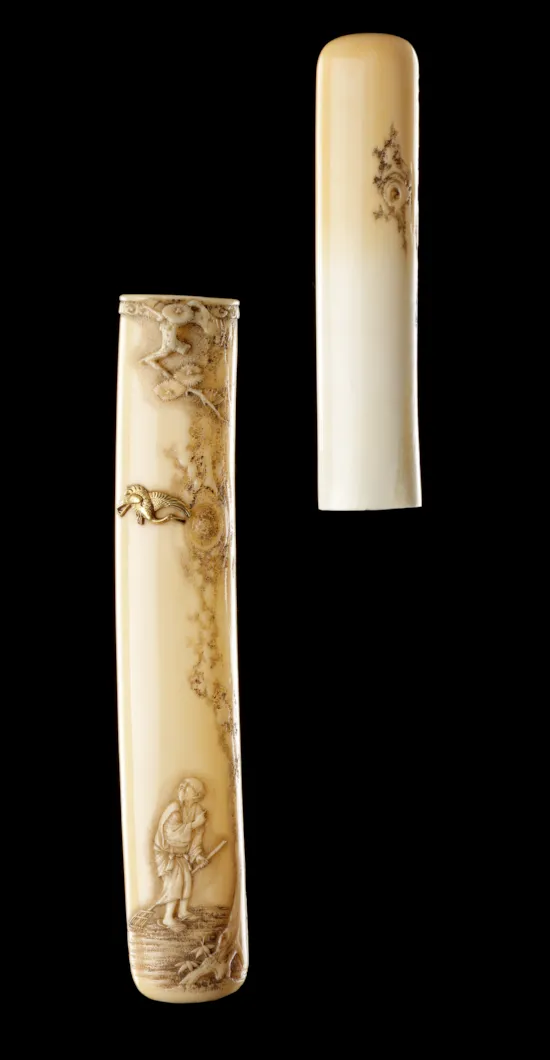
Carved from a single walrus tusk, with Jo standing at the base of a large pine tree, a branch of which forms the cord attachment
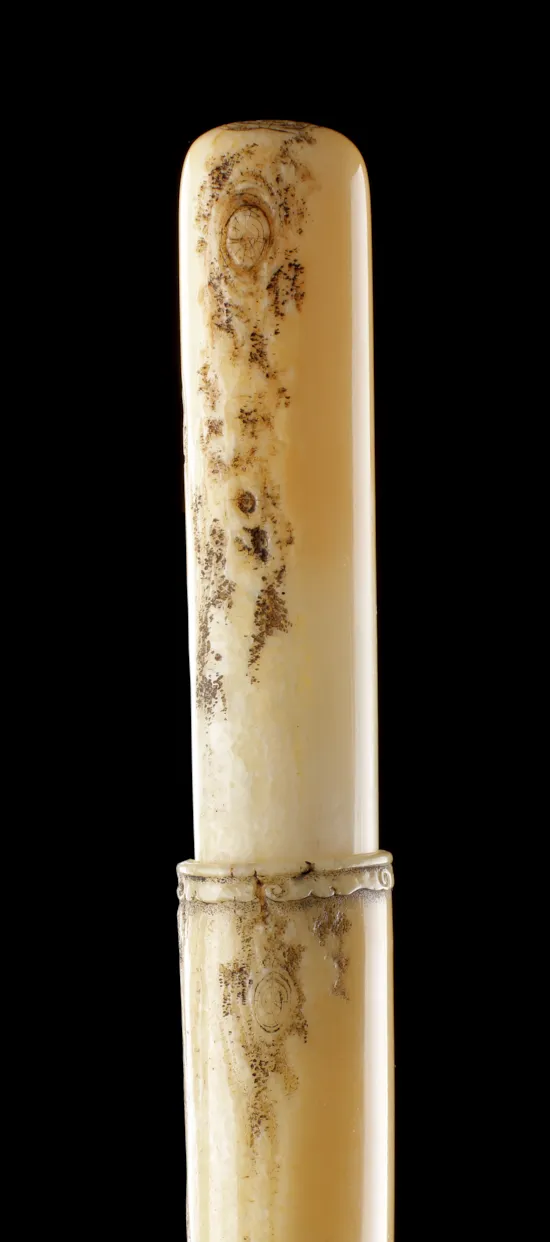
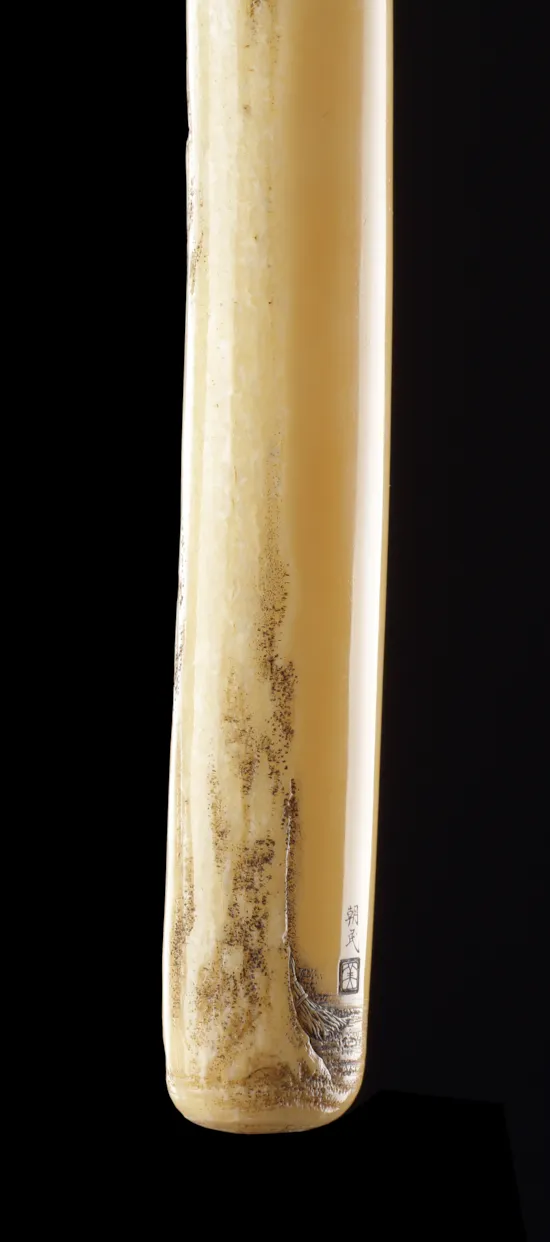
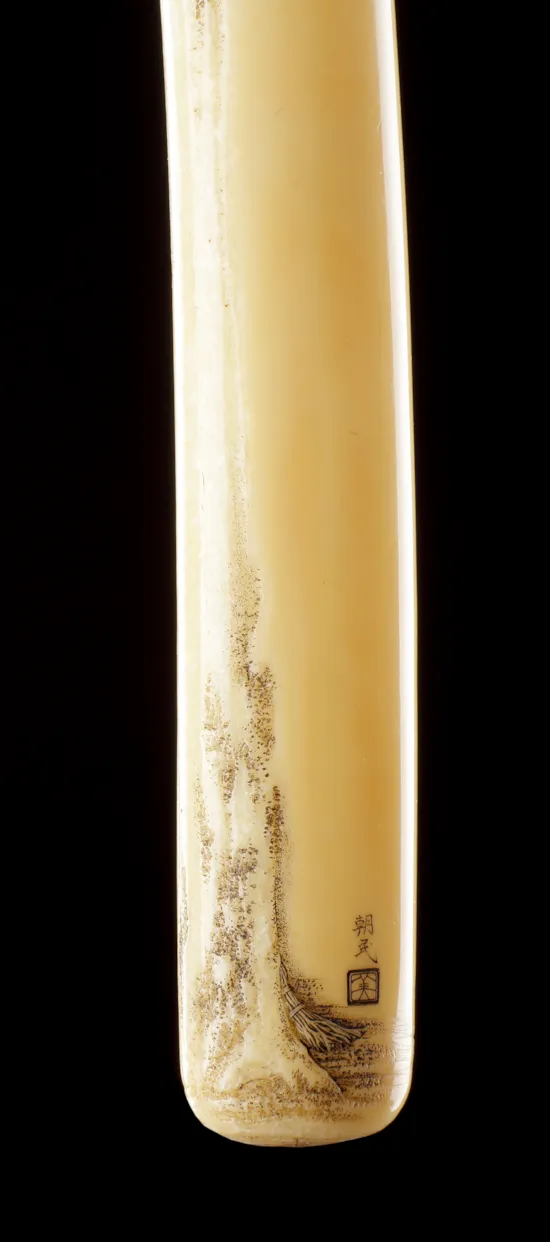
The trees trunk is suggested by the ‘crystalline’ core of the tusk, and the Uba’s presence is indicated by the brush of her besom appearing from behind the tree, while overhead flies a gold applied crane
Walrus, Gold
Signed: Chomin (with seal)
Japan
Circa 1880
Size: 20.5cm long - 8 ins long
Carved from a single walrus tusk, with Jo standing at the base of a large pine tree, a branch of which forms the cord attachment
The trees trunk is suggested by the ‘crystalline’ core of the tusk, and the Uba’s presence is indicated by the brush of her besom appearing from behind the tree, while overhead flies a gold applied crane
Walrus, Gold
Signed: Chomin (with seal)
Japan
Circa 1880
Size: 20.5cm long - 8 ins long
A Superb Pipe-Case ‘Musozutsu’
Carved from a single walrus tusk, with Jo standing at the base of a large pine tree, a branch of which forms the cord attachment
The trees trunk is suggested by the ‘crystalline’ core of the tusk, and the Uba’s presence is indicated by the brush of her besom appearing from behind the tree, while overhead flies a gold applied crane
Walrus, Gold
Signed: Chomin (with seal)
Japan
Circa 1880
Size: 20.5cm long - 8 ins long
Carved from a single walrus tusk, with Jo standing at the base of a large pine tree, a branch of which forms the cord attachment
The trees trunk is suggested by the ‘crystalline’ core of the tusk, and the Uba’s presence is indicated by the brush of her besom appearing from behind the tree, while overhead flies a gold applied crane
Walrus, Gold
Signed: Chomin (with seal)
Japan
Circa 1880
Size: 20.5cm long - 8 ins long
Widely known as ‘Kiseru Zutsu’ pipe cases, these exquisite examples of Japanese decorative art harmoniously blend aesthetic appeal with a distinct purpose. Crafted from diverse materials such as papier-mâché, wood, ivory, bone, and stags’ antler, single-section pipe cases are designated as ‘Senryu-Zutsu’. The origins of tobacco smoking in Japan can be traced back to the latter half of the 16th or the commencement of the 17th century, introduced by the Portuguese and subsequently reintroduced from Korea by soldiers of the Hideyoshi campaign. Despite governmental attempts to suppress this habit, it swiftly gained popularity among both men and women.
Initially, the pipe ‘Kiseru’ was of substantial size and was occasionally carried over the shoulder, even serving as a weapon in altercations. However, it gradually diminished in proportions, with a bowl capable of holding only a minuscule amount of tobacco, approximately the size of a pea. Consequently, these diminutive pipes have often been erroneously mistaken by uninformed Westerners for opium pipes. Smokers would inhale a few whiffs and subsequently empty their pipe to refill, with two or three refills considered sufficient.
Ladies employed longer pipes, ranging from 18 to 24 inches in length, while men’s pipes were typically limited to 6 to 8 inches. These pipes were often intricately engraved or inlaid and were subsequently secured within pipe sheaths. These sheaths could be conveniently inserted beneath the girdle or suspended from them using a cord and netsuke.
The artist has ingeniously employed the vertical ‘crystal’ grain of the tusk to replicate the texture of the tree bark.
Initially, the pipe ‘Kiseru’ was of substantial size and was occasionally carried over the shoulder, even serving as a weapon in altercations. However, it gradually diminished in proportions, with a bowl capable of holding only a minuscule amount of tobacco, approximately the size of a pea. Consequently, these diminutive pipes have often been erroneously mistaken by uninformed Westerners for opium pipes. Smokers would inhale a few whiffs and subsequently empty their pipe to refill, with two or three refills considered sufficient.
Ladies employed longer pipes, ranging from 18 to 24 inches in length, while men’s pipes were typically limited to 6 to 8 inches. These pipes were often intricately engraved or inlaid and were subsequently secured within pipe sheaths. These sheaths could be conveniently inserted beneath the girdle or suspended from them using a cord and netsuke.
The artist has ingeniously employed the vertical ‘crystal’ grain of the tusk to replicate the texture of the tree bark.
Jacques Carré collection
Ex Private collection
M. Rutherston, Kitsuengu, October 2018, no. 7
Ex Private collection
M. Rutherston, Kitsuengu, October 2018, no. 7
A Superb Pipe-Case ‘Musozutsu’