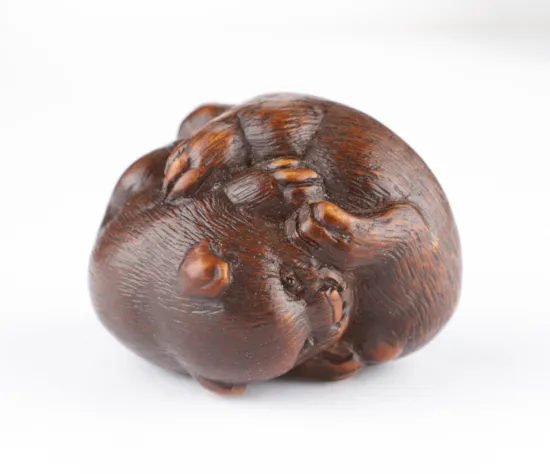
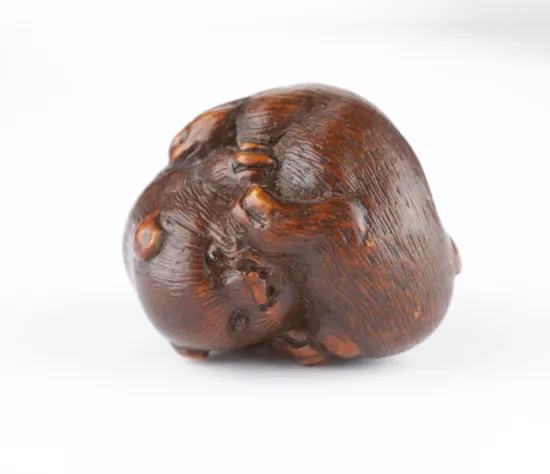
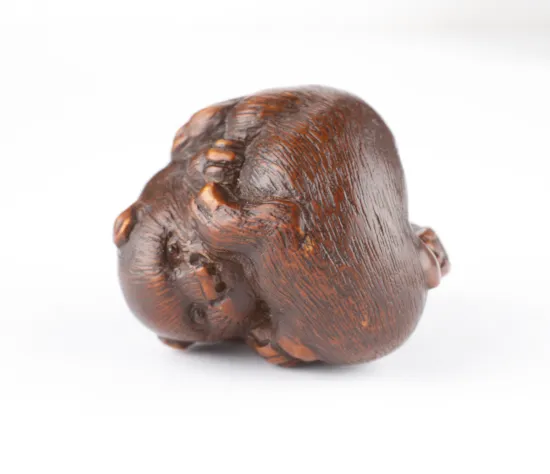
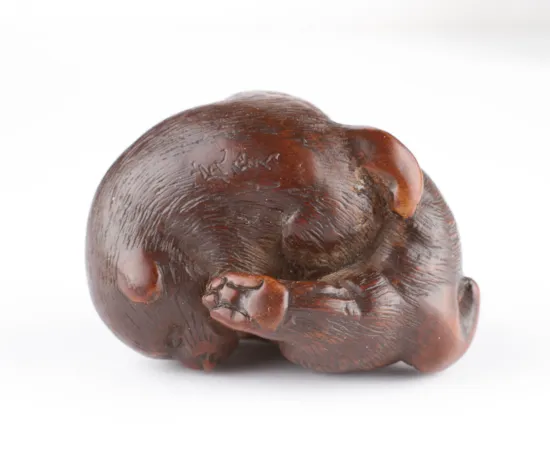
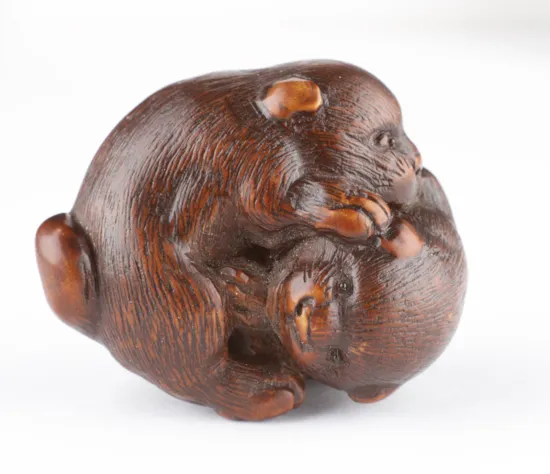
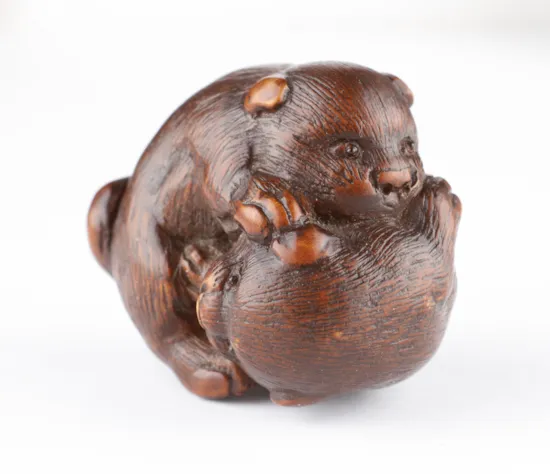
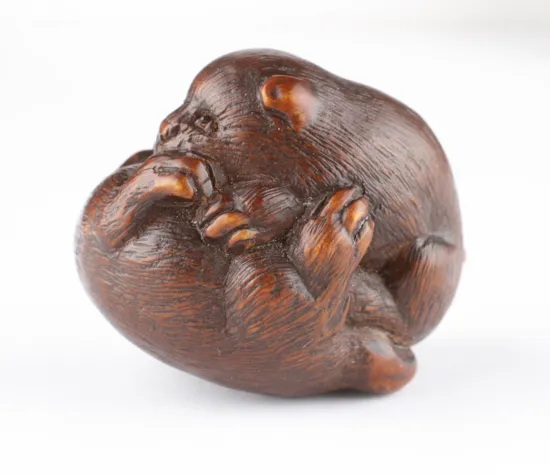
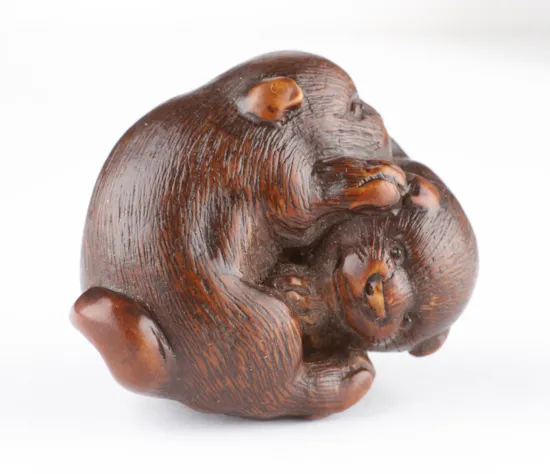
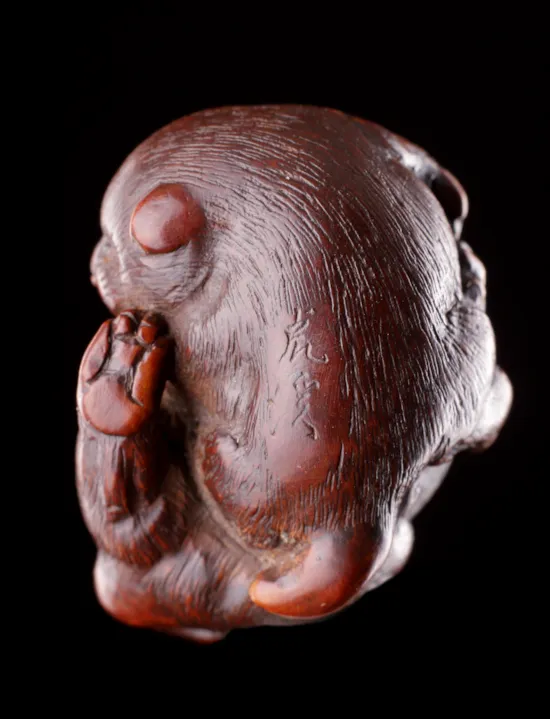
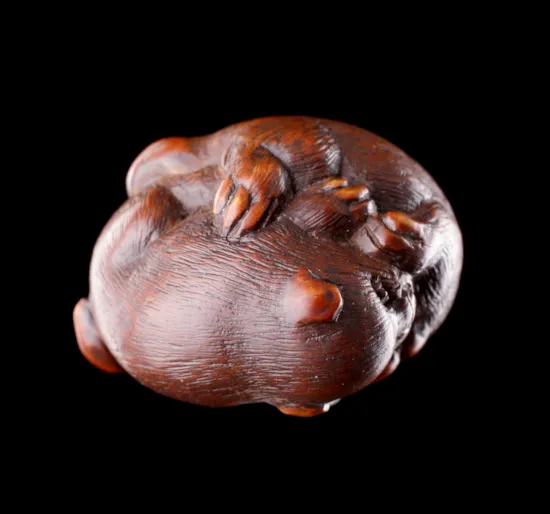
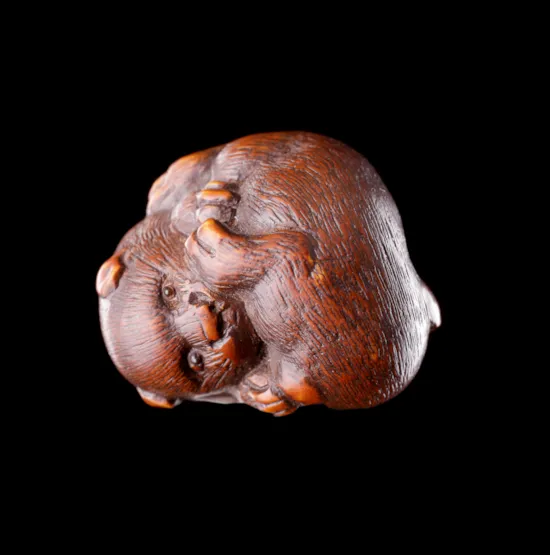
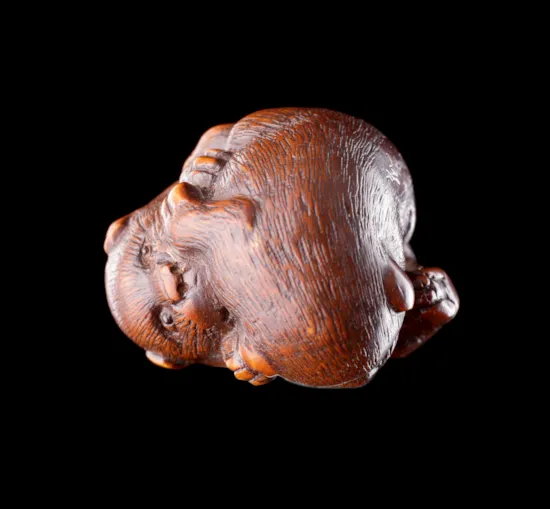
A Finely Carved Wood Netsuke of Two Puppy Dogs Playing
A Finely Carved Wood Netsuke of Two Puppy Dogs Playing
The playful puppies with inlaid horn eyes
Boxwood, Horn
Signed: Kokei
Japan
Circa 1820 - 50
Size: 3.5 dia. - 1⅓ ins dia.
Provenance:
Ex Private French collection
The playful puppies with inlaid horn eyes
Boxwood, Horn
Signed: Kokei
Japan
Circa 1820 - 50
Size: 3.5 dia. - 1⅓ ins dia.
Provenance:
Ex Private French collection
A Finely Carved Wood Netsuke of Two Puppy Dogs Playing
The playful puppies with inlaid horn eyes
Boxwood, Horn
Signed: Kokei
Japan
Circa 1820 - 50
Size: 3.5 dia. - 1⅓ ins dia.
The playful puppies with inlaid horn eyes
Boxwood, Horn
Signed: Kokei
Japan
Circa 1820 - 50
Size: 3.5 dia. - 1⅓ ins dia.
The netsuke functioned as a toggle or counterweight at the opposite end of the cord that secured the Inro or other small accessory dangling from the girdle. Initially, a small gourd fulfilled this purpose, occasionally serving as an amulet and later adopted as a sake flask. This custom originated in the 16th century, and during the early Edo period, it was accompanied by other diminutive items suspended from the girdle by an ivory ring. By the end of the 17th century, hanging Inro and money purses known as ‘Kinchaku’ on a cord from imported Chinese seals, pierced with a hole to accommodate the cord, had become firmly established. As Japanese carvers sought new employment opportunities, they increasingly devoted their attention to these small objects. However, for a period, netsuke were not worn by the Samurai class but rather cultivated by merchants who held them in high regard, comparable to the Samurai’s reverence for their swords. By 1781, a list of artisans compiled by Inaba Michitatsu included fifty-seven netsuke carvers, among whom were a shinto priest and several Buddhist priests.
Ex Private French collection
A Finely Carved Wood Netsuke of Two Puppy Dogs Playing