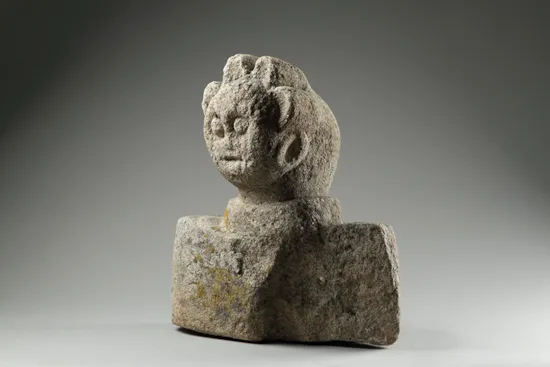
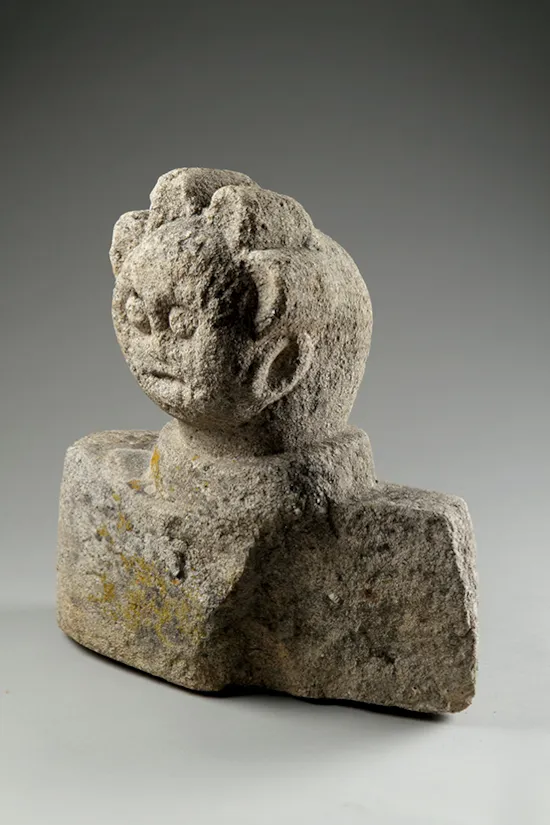
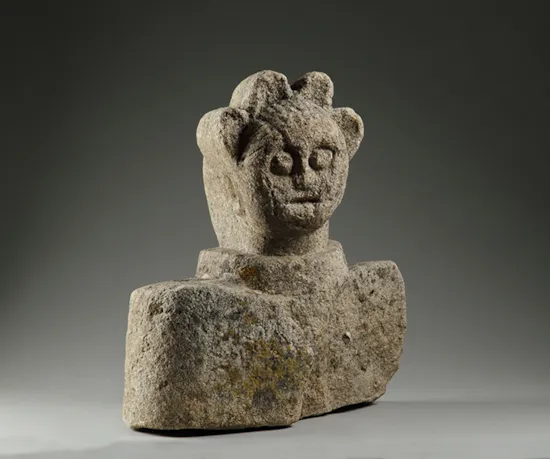
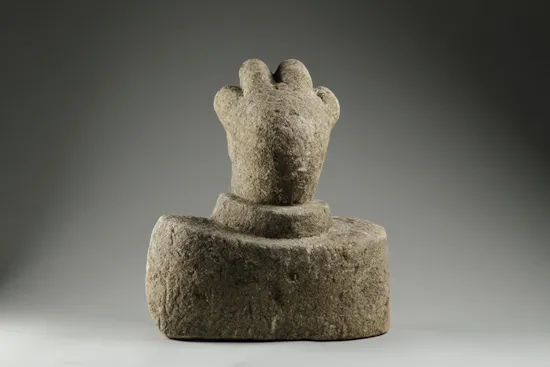
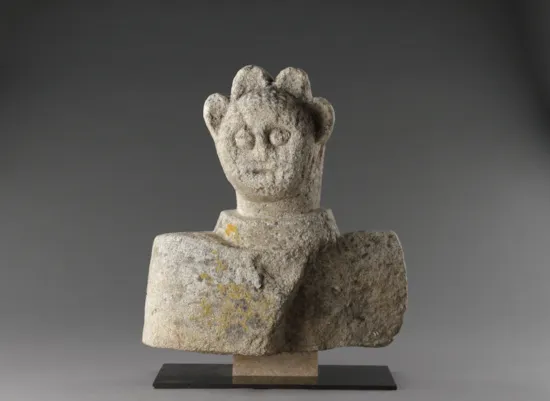
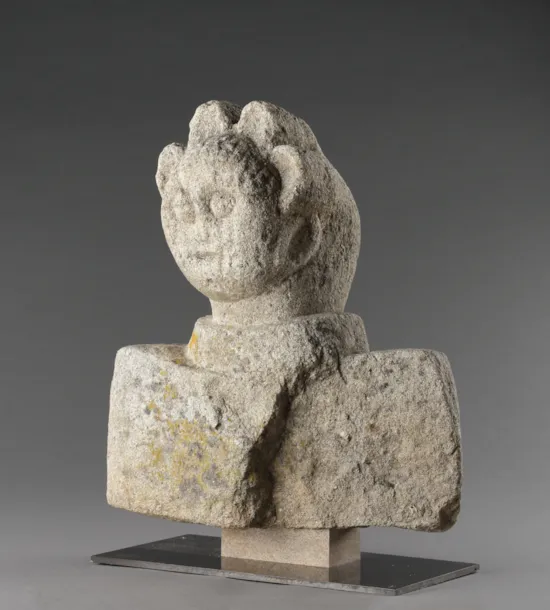
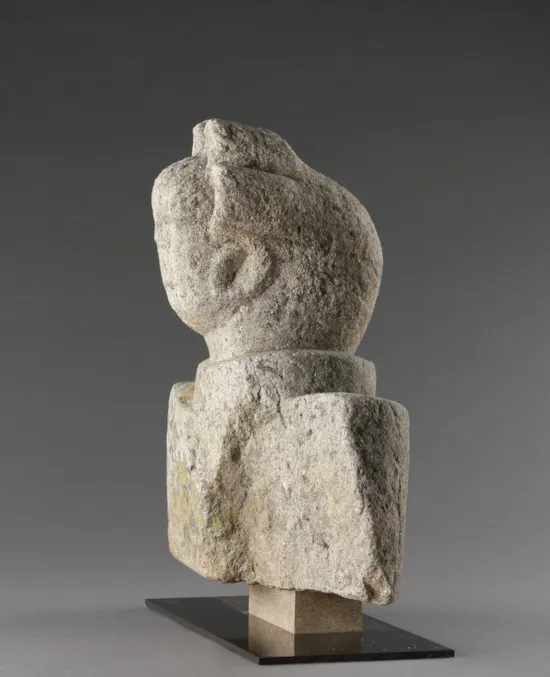
Rare Ancient British Celtic Limestone Bust of a Radiate Deity ‘Sol Invicta’
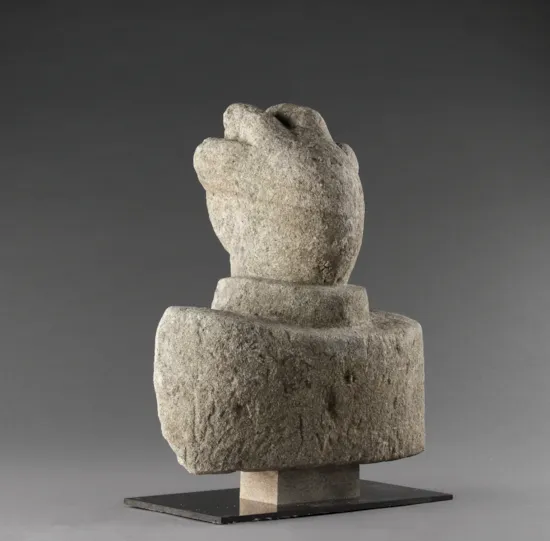
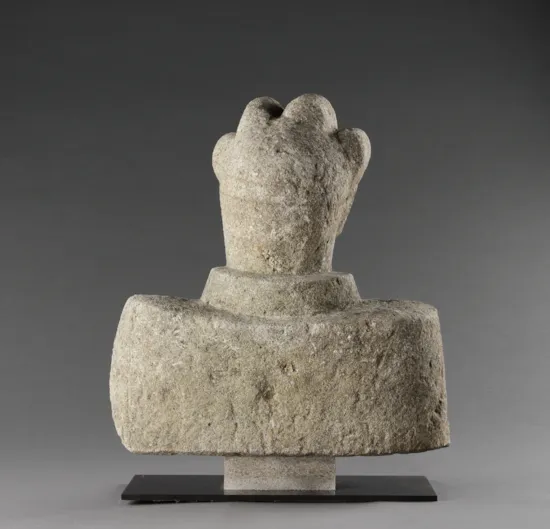
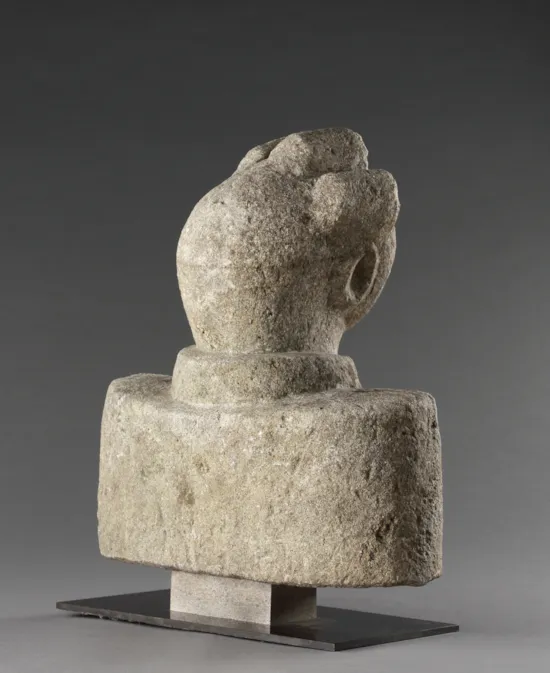
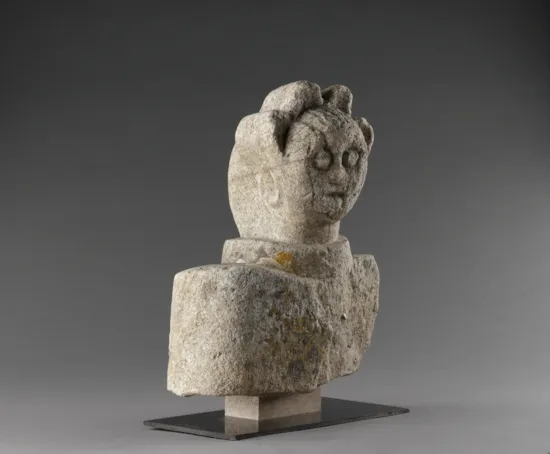
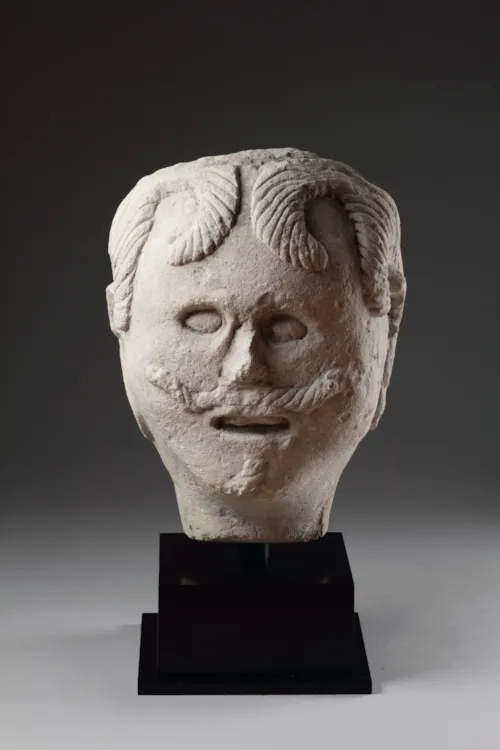
A Rare Ancient Celtic Bust of a Radiate Deity ‘Sol Invicta’ Wearing a Halo of the Rays of the Sun
Limestone
British
1st Century BC - 1st Century AD
Size: 42cm high, 40cm wide, 20cm deep - 16½ ins high, 15¾ ins wide, 8 ins deep
Limestone
British
1st Century BC - 1st Century AD
Size: 42cm high, 40cm wide, 20cm deep - 16½ ins high, 15¾ ins wide, 8 ins deep
A Rare Ancient Celtic Bust of a Radiate Deity ‘Sol Invicta’ Wearing a Halo of the Rays of the Sun
Limestone
British
1st Century BC - 1st Century AD
Size: 42cm high, 40cm wide, 20cm deep - 16½ ins high, 15¾ ins wide, 8 ins deep
Limestone
British
1st Century BC - 1st Century AD
Size: 42cm high, 40cm wide, 20cm deep - 16½ ins high, 15¾ ins wide, 8 ins deep
The brilliance of Celtic art resided in the harmonious fusion of various disparate styles into a singularly unique and distinctive expression. In both Celtic and subsequent classical religious contexts, the sun god, known as ‘Sol Invictus’ (‘the unconquered sun’) or ‘Apollo’ as the Romano-British revered him, possessed oracular and healing attributes. The human head was regarded by the Celts as a symbolic representation of divinity and otherworldly powers. The recurring theme of the head throughout Celtic religious tradition is not a distinct cult but an integral component of all other Celtic cults.
The Celts perceived the presence of supernatural power as an integral aspect of their world. The sun, the sky, and the subterranean realms all harboured their own spirits. Every mountain, river, spring, marsh, bog, tree, and rocky outcrop was imbued with divine essence. A comparable relief depicting this deity was discovered in Armagh, Northern Ireland, and depicts the god with distinctly radiating hair. This relief was recovered from the site of the Protestant Cathedral during its restoration and reconstruction in 1840. The hair forms stiff strands that radiate around the head. Another stone relief from Whitley Castle in Northumberland is known as ‘Apollo’. It is carved as a rudimentary radiate figure and likely pertains to a native Celtic deity named ‘Maponus’ rather than the classical Roman deity, Apollo, with whom he shared the domains of music and poetry.
The Celts perceived the presence of supernatural power as an integral aspect of their world. The sun, the sky, and the subterranean realms all harboured their own spirits. Every mountain, river, spring, marsh, bog, tree, and rocky outcrop was imbued with divine essence. A comparable relief depicting this deity was discovered in Armagh, Northern Ireland, and depicts the god with distinctly radiating hair. This relief was recovered from the site of the Protestant Cathedral during its restoration and reconstruction in 1840. The hair forms stiff strands that radiate around the head. Another stone relief from Whitley Castle in Northumberland is known as ‘Apollo’. It is carved as a rudimentary radiate figure and likely pertains to a native Celtic deity named ‘Maponus’ rather than the classical Roman deity, Apollo, with whom he shared the domains of music and poetry.
Ex Private collection West Country U.K.
Ex Finch and Co, item number 1, catalogue number 30, Summer 2018
Ex Private collection
cf: Dr Anne Ross ‘Pagan Celtic Britain’ no. 916, for a similar Stone Radiate Deity
Ex Finch and Co, item number 1, catalogue number 30, Summer 2018
Ex Private collection
cf: Dr Anne Ross ‘Pagan Celtic Britain’ no. 916, for a similar Stone Radiate Deity
Rare Ancient British Celtic Limestone Bust of a Radiate Deity ‘Sol Invicta’