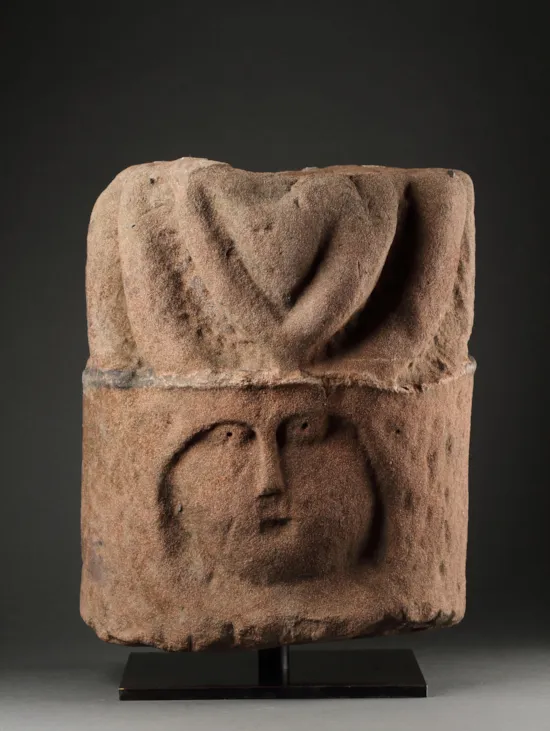
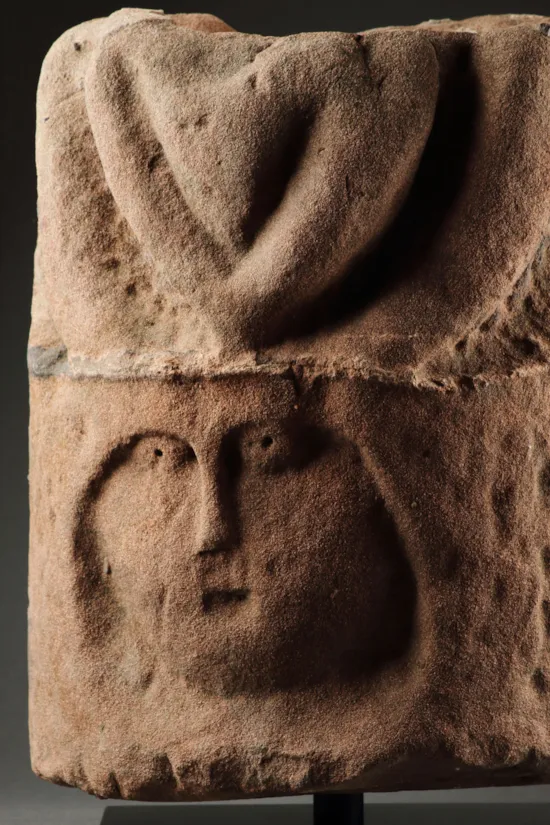
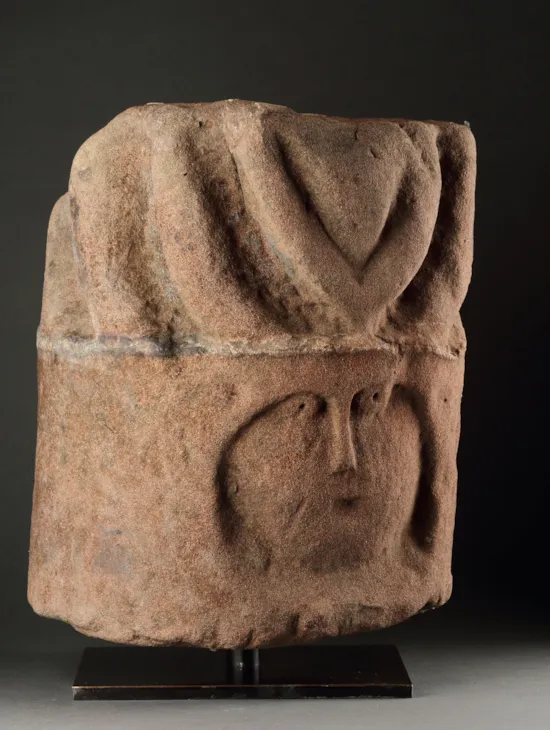
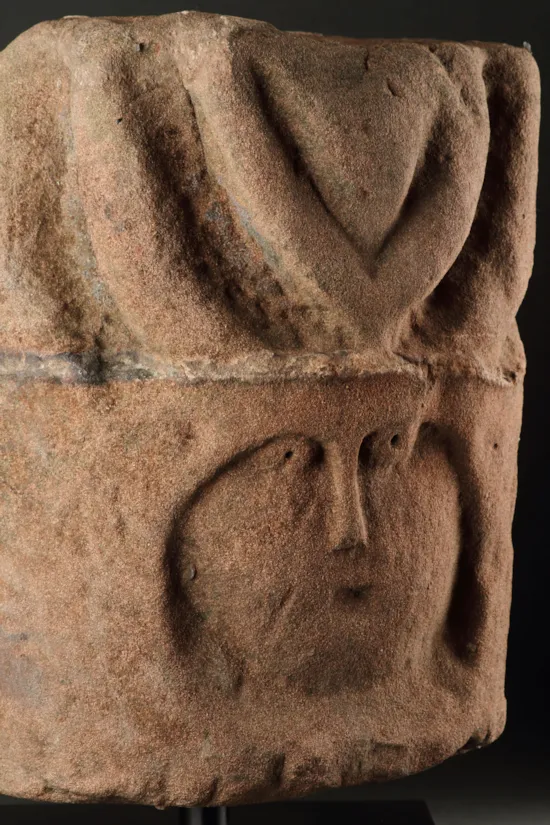
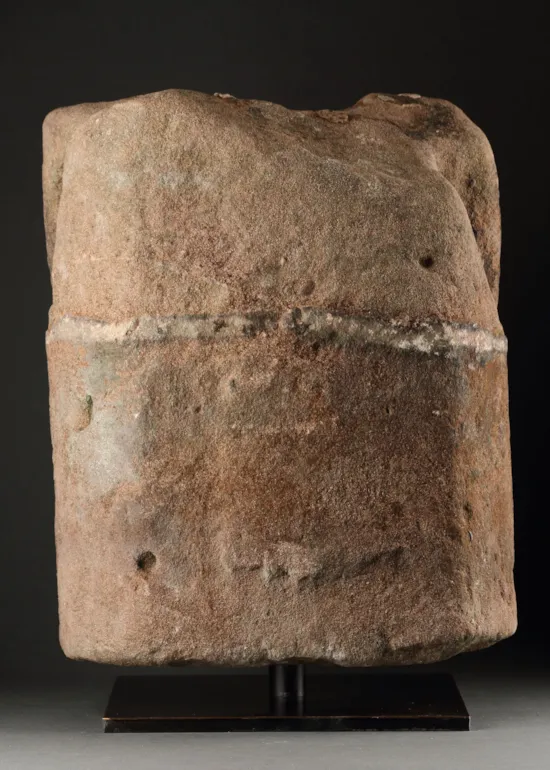
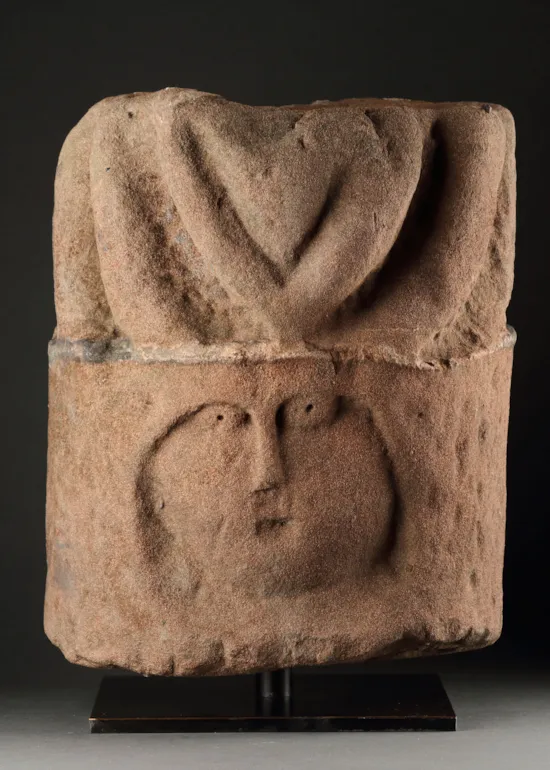
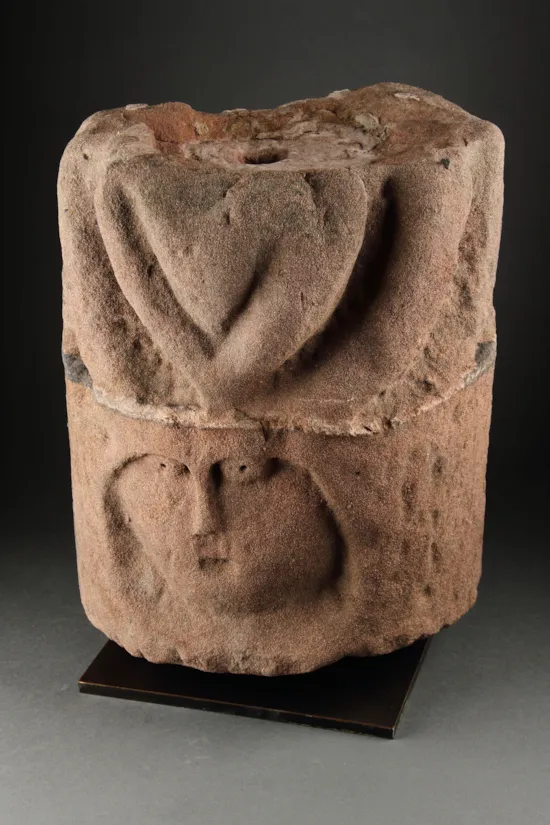
A Large Rare British Celtic Apotropaic Sandstone Head of ‘Cernunnos’
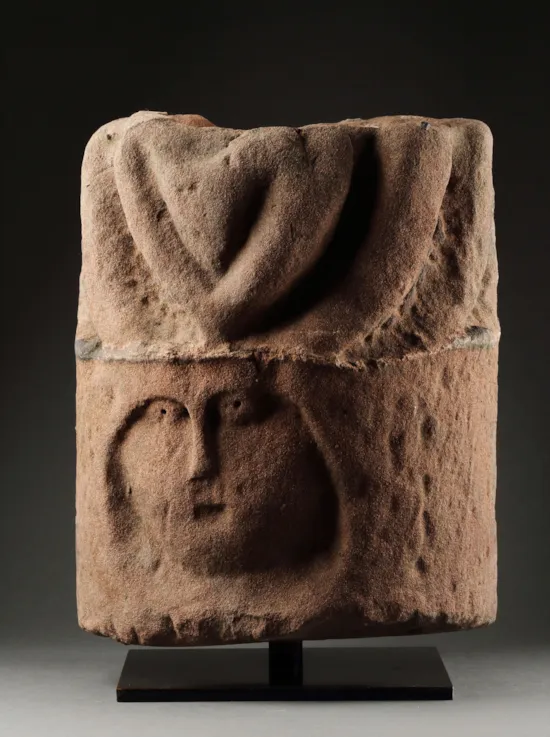
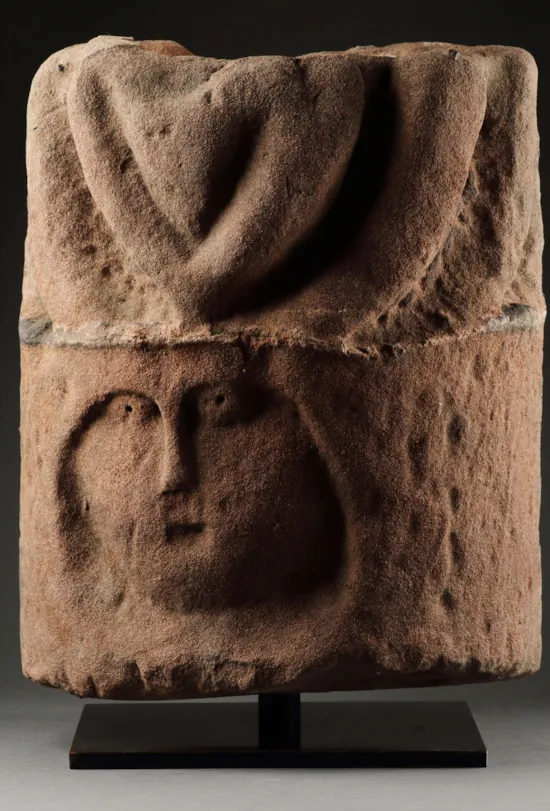
A Large Rare Celtic Apotropaic Head of ‘Cernunnos’ the Horned Deity with Typical Eyes Triangular Nose and Slit Mouth
Sandstone
Britain
1st Century B.C - 1st Century A.D
Size: 47.5cm high, 39cm wide, 33cm deep - 18¼ ins high, 15¼ ins wide, 13 ins deep / 52cm high - 20.5cm high (with base)
Sandstone
Britain
1st Century B.C - 1st Century A.D
Size: 47.5cm high, 39cm wide, 33cm deep - 18¼ ins high, 15¼ ins wide, 13 ins deep / 52cm high - 20.5cm high (with base)
A Large Rare Celtic Apotropaic Head of ‘Cernunnos’ the Horned Deity with Typical Eyes Triangular Nose and Slit Mouth
Sandstone
Britain
1st Century B.C - 1st Century A.D
Sandstone
Britain
1st Century B.C - 1st Century A.D
‘Cernunnos’ was a horned god and one of the most ancient Celtic deities. He predates Roman influence in Western Europe with images occurring from as early as the 4th century B.C. Known as the ‘Lord of the Animals’ essentially he was a god symbolising fertility and fecundity in nature. As the patron god of hunters his horned head was an appropriate symbol for a people who decapitated their enemies and revered the head, a people given to fighting, cattle lifting and hunting. The horned god was their leader in war, symbolic of virility, lawgiver in times of peace, protector in times of danger. He was an all purpose tribal god and his deep rooted nature and association with fertility made him unacceptable to emerging Christianity who destroyed any maternalistic traces of his cult whenever they could. The Romans, however, took great care not to antagonise the ‘god of place’, the named warrior of the Celts, and equated him with a member of the more familiar classical pantheon such as Pan, or as an armed warrior equivalent to Mars.
In Dr. Anne Ross’s 1967 book, “Pagan Celtic Britain,” she dedicates a chapter to “The Horned God in Britain,” exploring the cult of the human head, which she argues is the most widespread, typical, and enduring Celtic cult. Cernunnos was extensively depicted in Celtic art across a vast region, encompassing Northern Italy, Romania, France, and Denmark, as well as Great Britain and Ireland.
Celtic cult images of Cernunnos from the pre-Roman Iron Age are scarce, such as the one found on the 1st-century BC “Gundestrup Cauldron.” In contrast, during the Roman period, over fifty representations of this god are recorded, primarily concentrated in northeastern Gaul. One notable example is the “Relief of Cernunnos” from Rheims, France, dating back to the 1st to 2nd centuries AD. This relief depicts Cernunnos seated cross-legged on a dais, wearing a torc around his neck. He is pouring money or corn from a bag into a bowl to feed a small bull and a stag at his feet. These figures are flanked by the classical gods Apollo and Mercury.
The Roman era witnessed a significant influx of Celtic religious imagery, influenced by Roman forms of expression. This fusion of Roman and Celtic artistic styles allowed for a clearer definition of Celtic perceptions of the supernatural.
In Dr. Anne Ross’s 1967 book, “Pagan Celtic Britain,” she dedicates a chapter to “The Horned God in Britain,” exploring the cult of the human head, which she argues is the most widespread, typical, and enduring Celtic cult. Cernunnos was extensively depicted in Celtic art across a vast region, encompassing Northern Italy, Romania, France, and Denmark, as well as Great Britain and Ireland.
Celtic cult images of Cernunnos from the pre-Roman Iron Age are scarce, such as the one found on the 1st-century BC “Gundestrup Cauldron.” In contrast, during the Roman period, over fifty representations of this god are recorded, primarily concentrated in northeastern Gaul. One notable example is the “Relief of Cernunnos” from Rheims, France, dating back to the 1st to 2nd centuries AD. This relief depicts Cernunnos seated cross-legged on a dais, wearing a torc around his neck. He is pouring money or corn from a bag into a bowl to feed a small bull and a stag at his feet. These figures are flanked by the classical gods Apollo and Mercury.
The Roman era witnessed a significant influx of Celtic religious imagery, influenced by Roman forms of expression. This fusion of Roman and Celtic artistic styles allowed for a clearer definition of Celtic perceptions of the supernatural.
Ex Private English collection
Ex Finch and Co catalogue number 36, item number 104
Ex Private collection
Ex Finch and Co catalogue number 36, item number 104
Ex Private collection
A Large Rare British Celtic Apotropaic Sandstone Head of ‘Cernunnos’