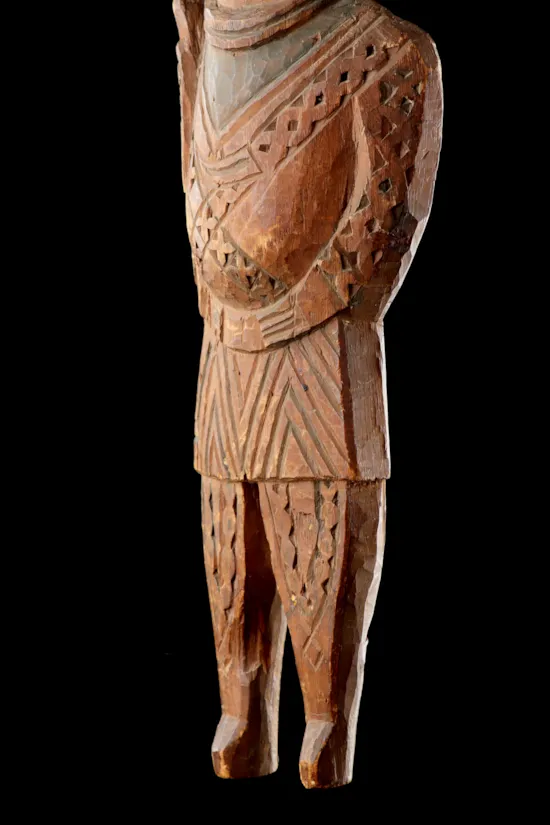
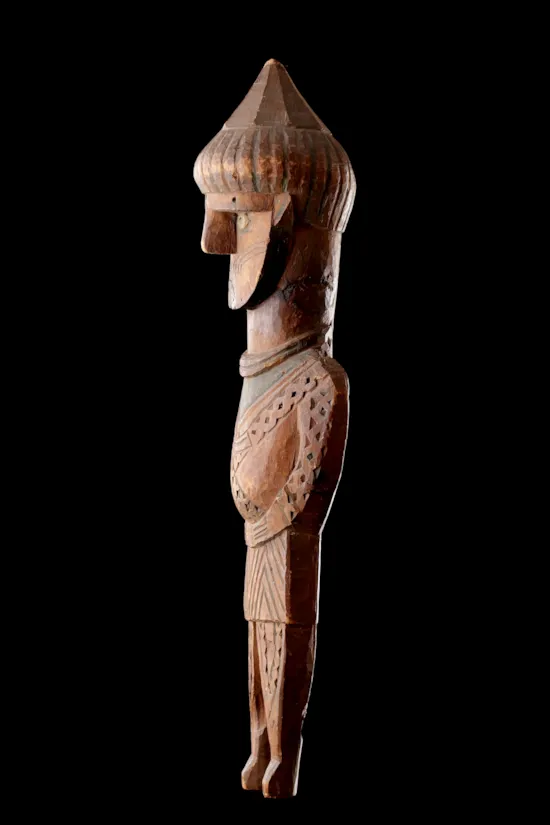
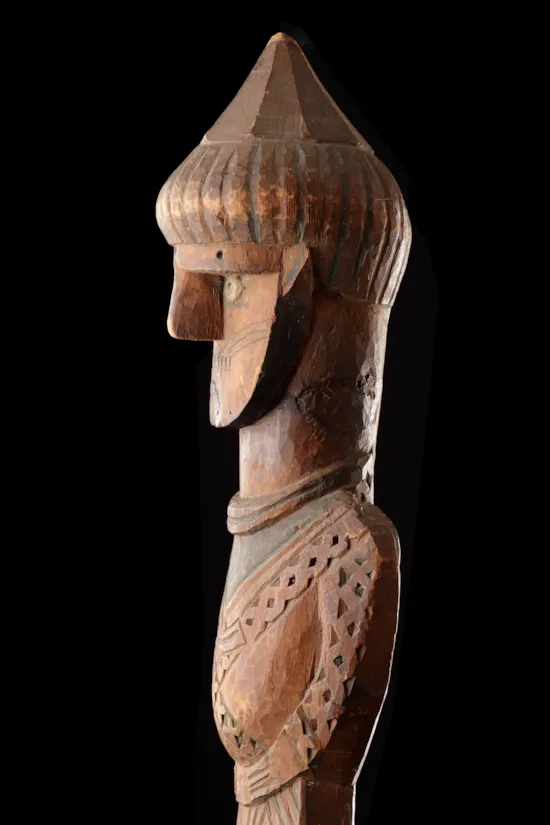
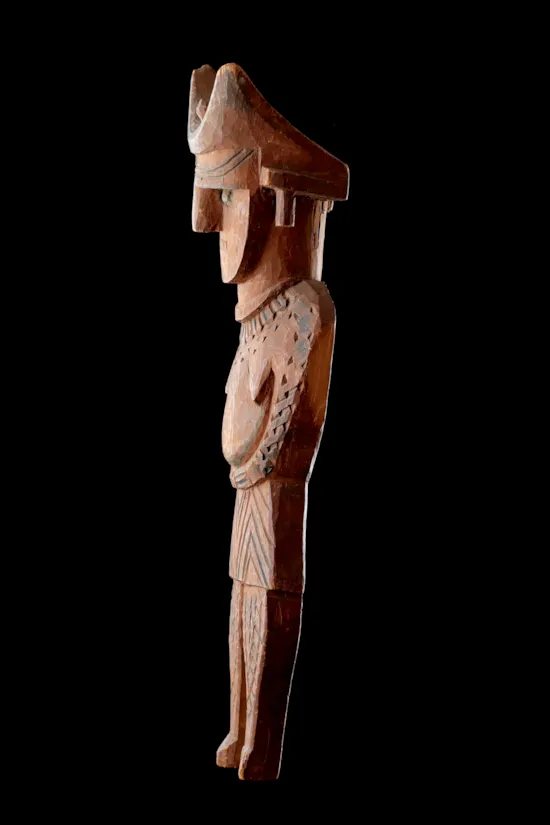
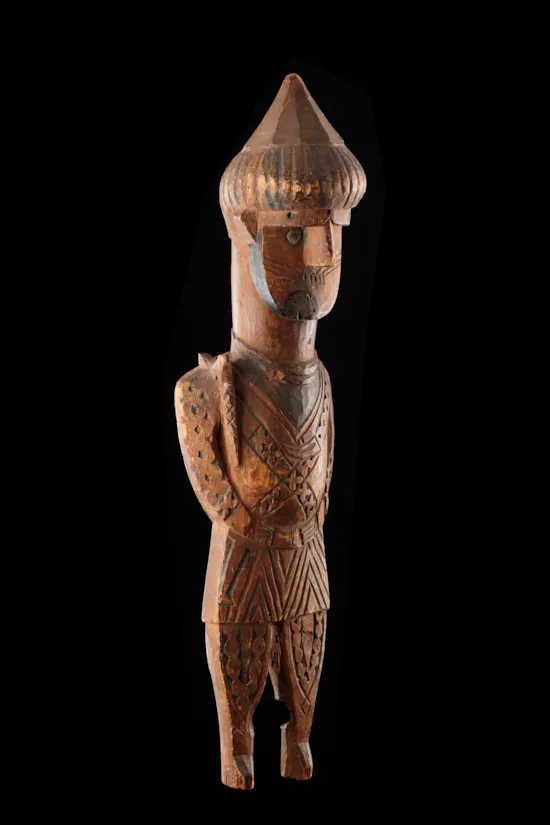
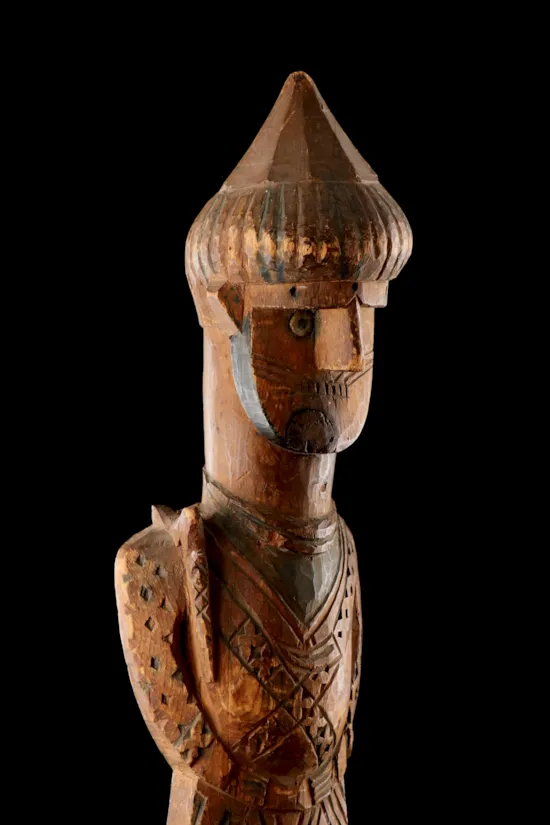
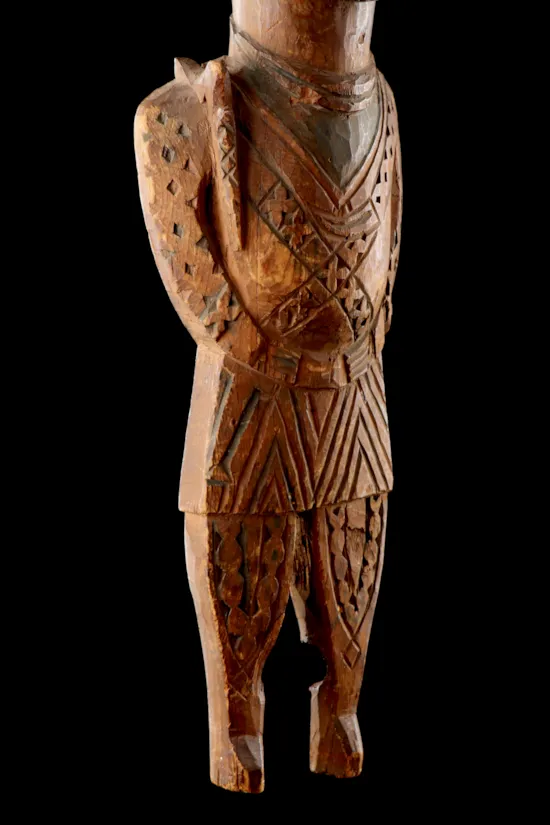
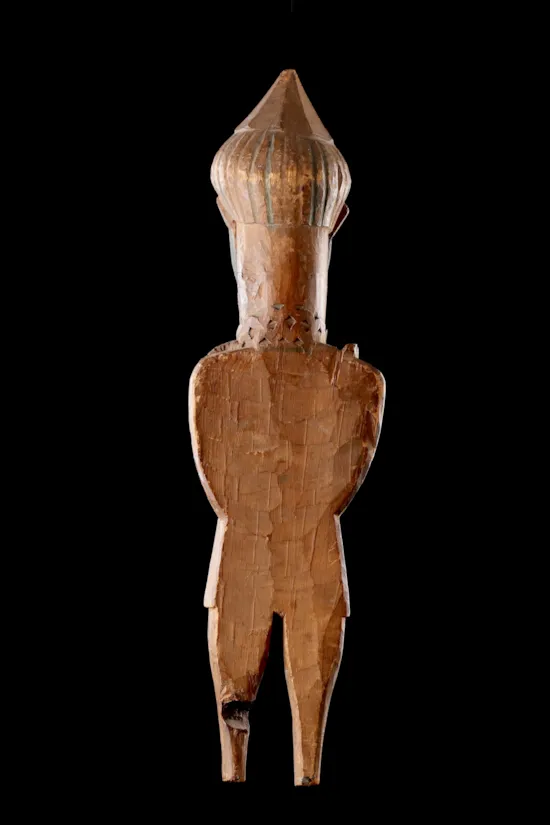
A Rare Pair of Kalasha Peoples Carved Funerary Figures
A Rare Pair of Kalasha Peoples Carved Funerary Figures
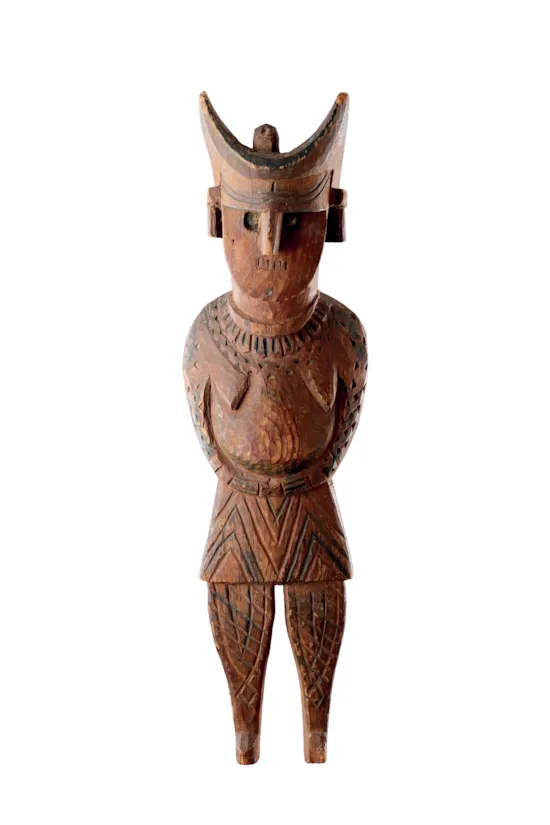
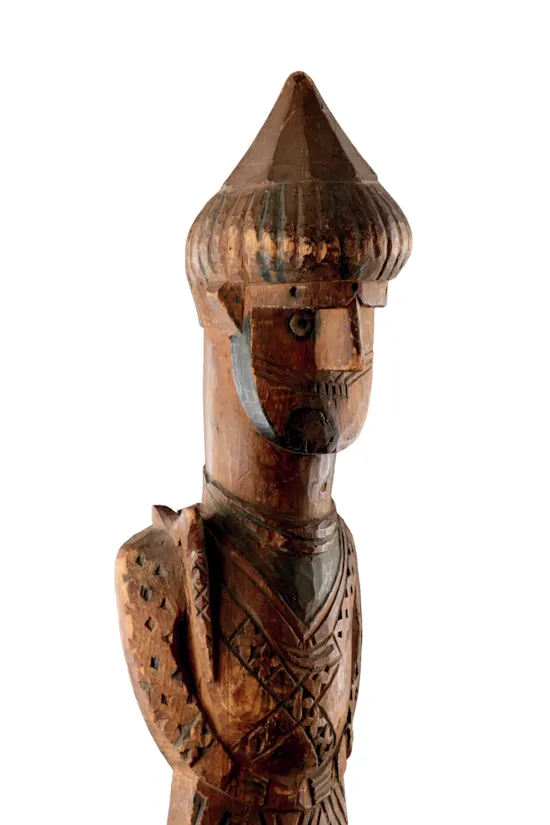
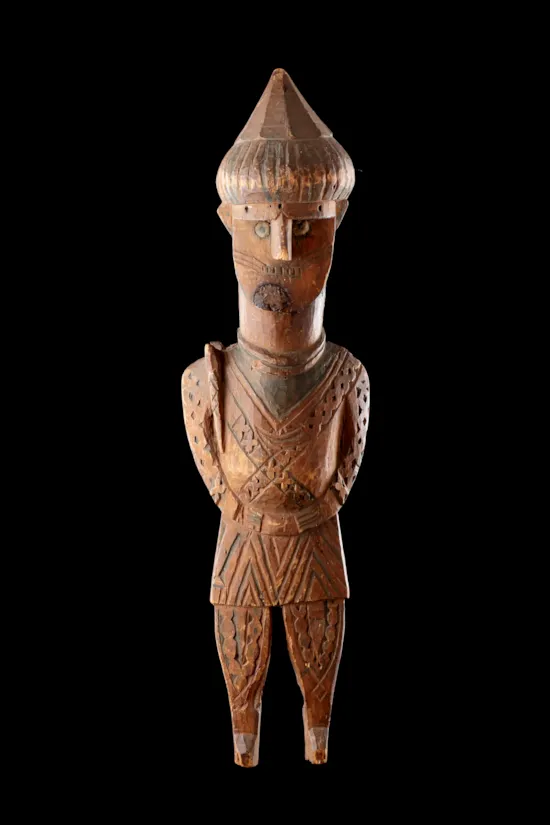
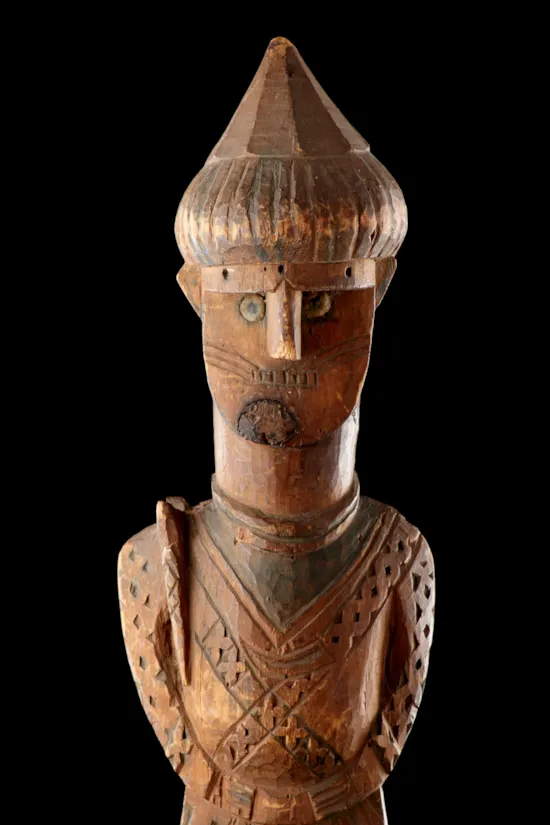
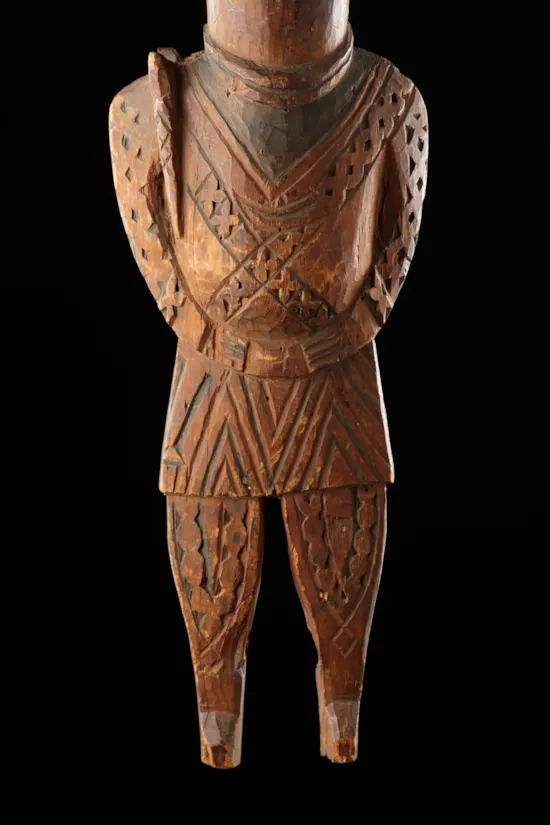
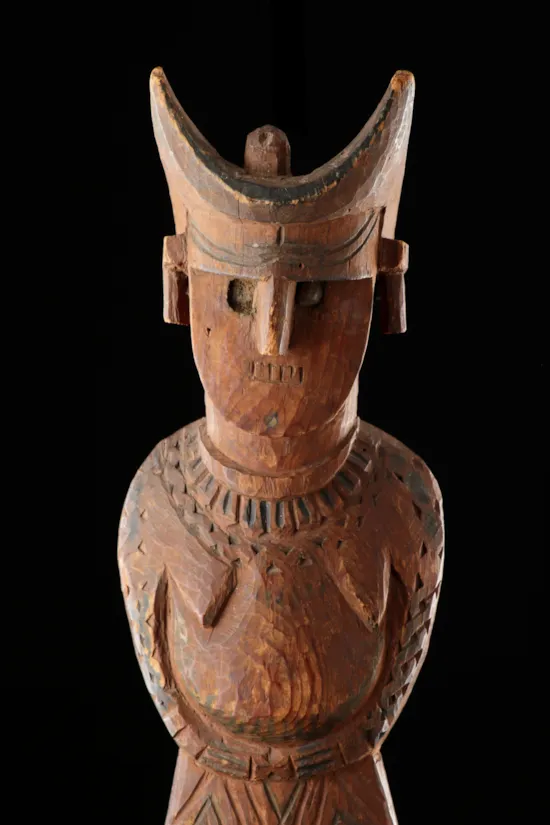
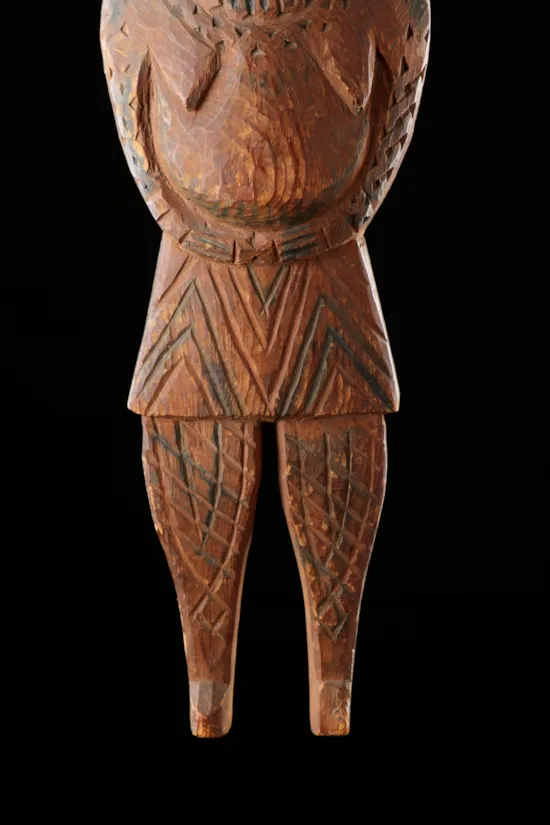
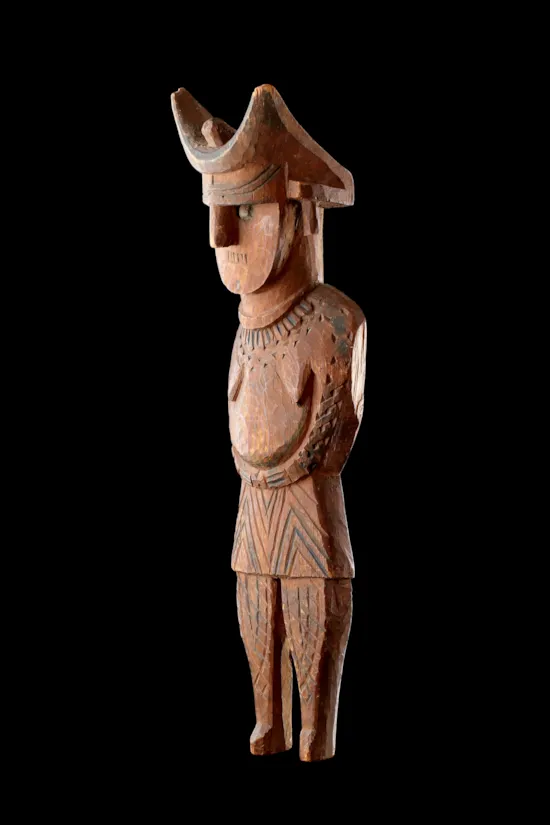
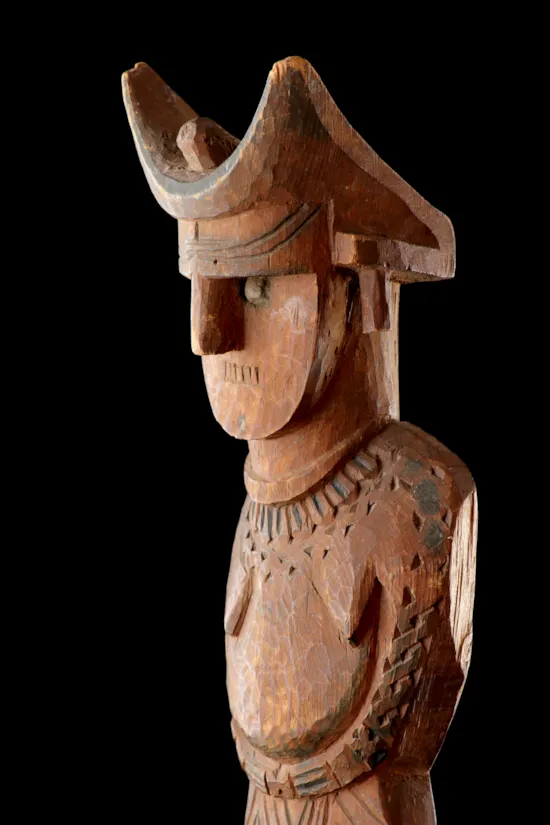
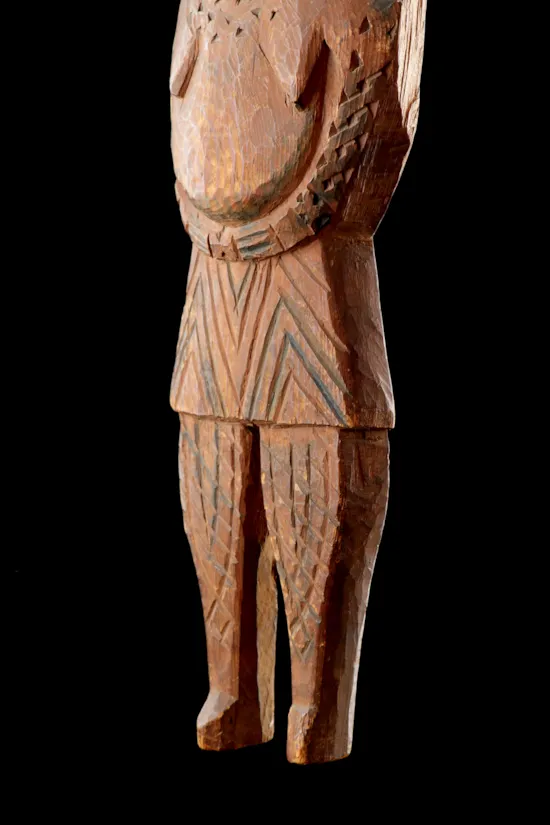
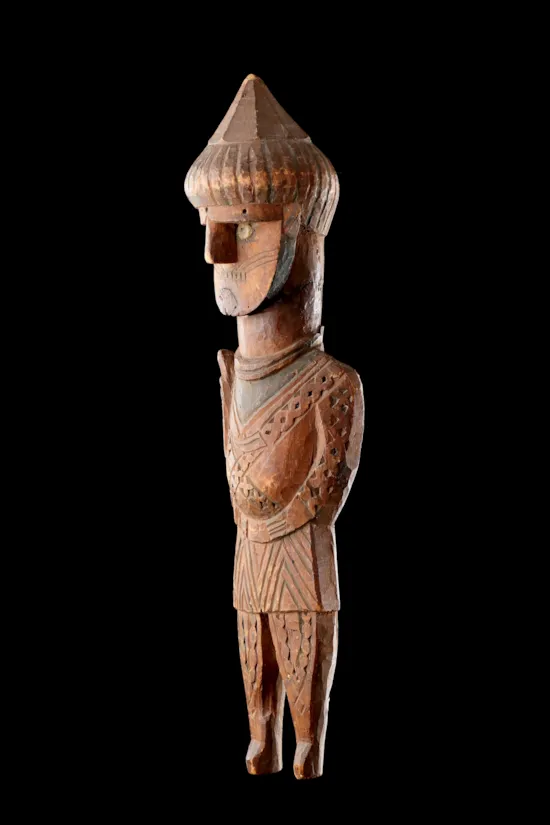
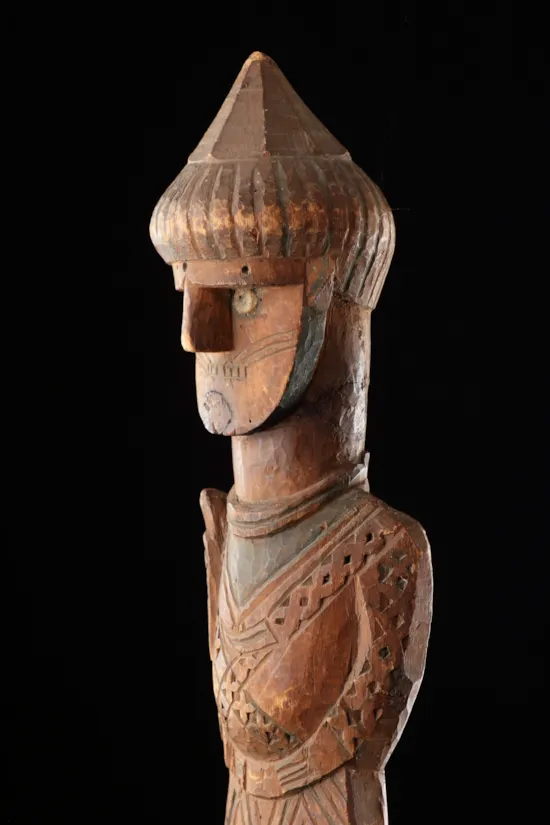
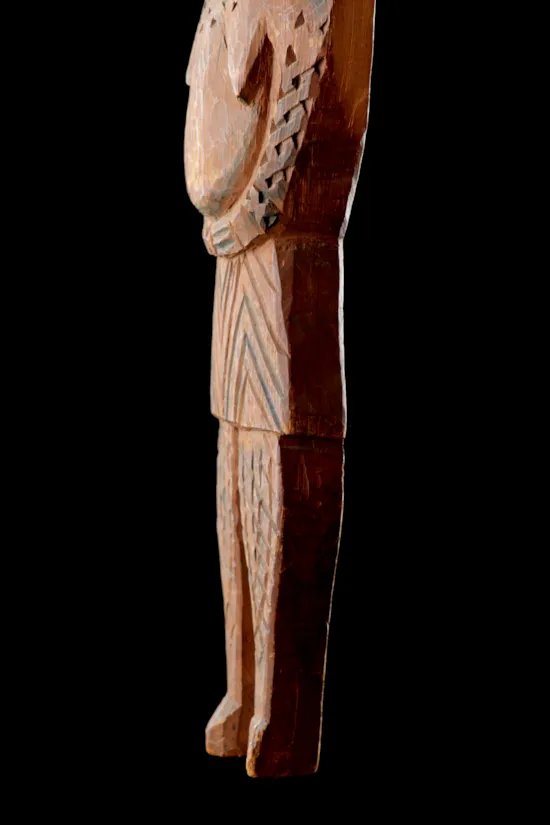
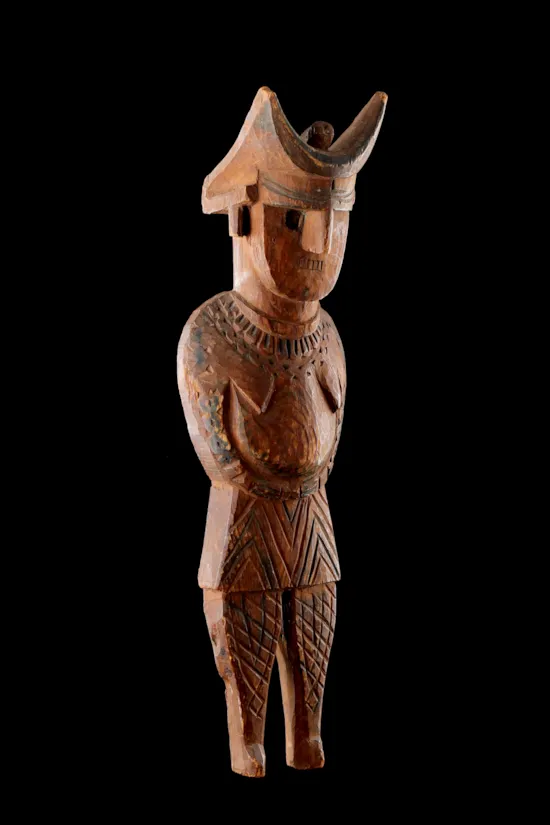
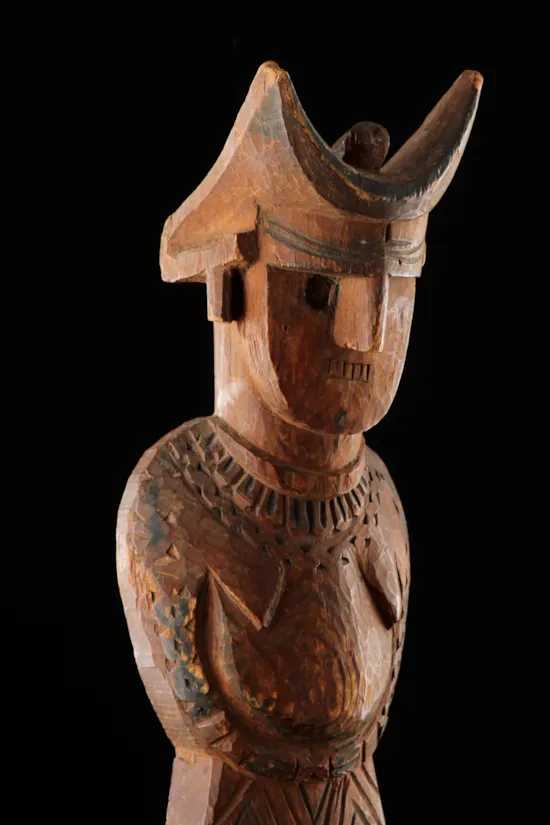
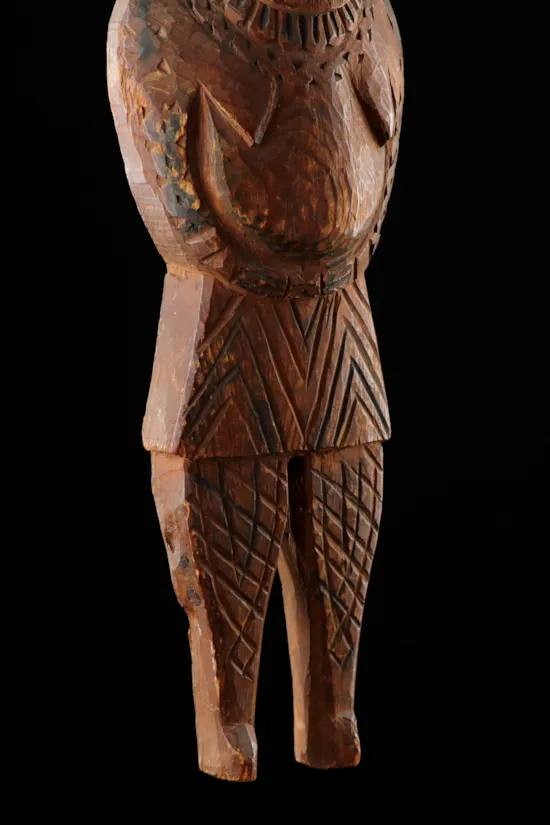
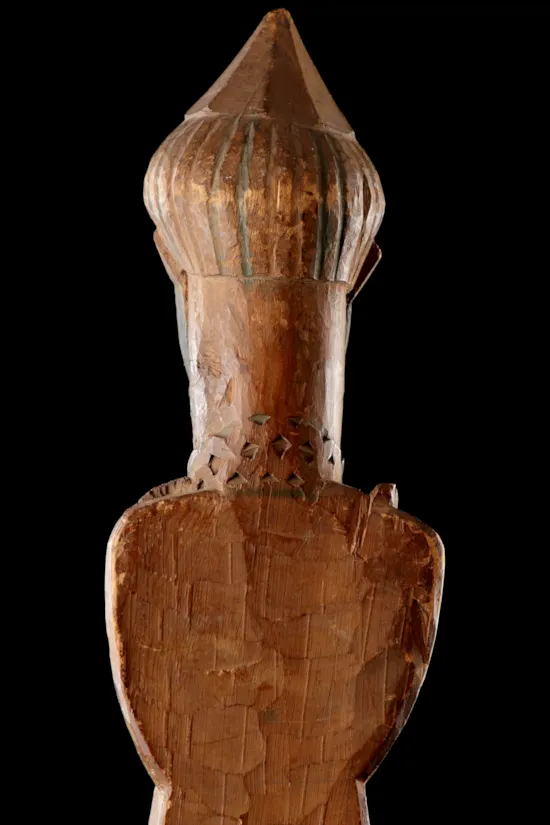
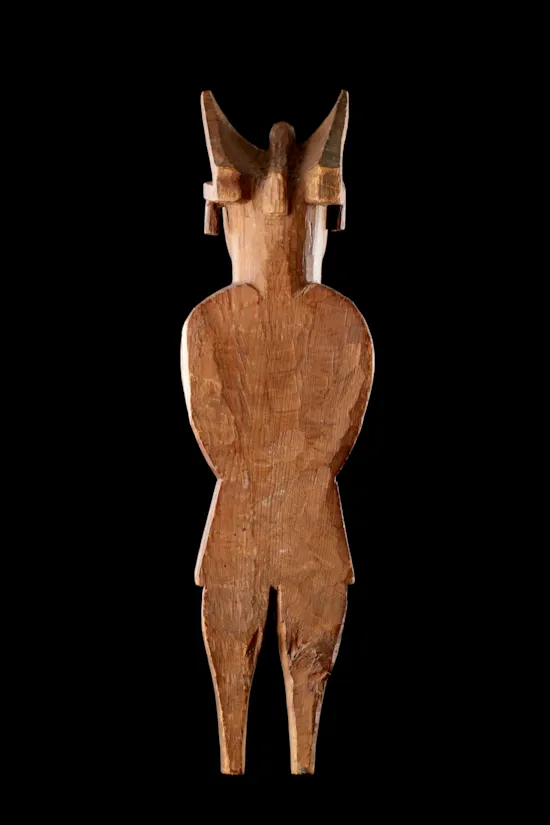
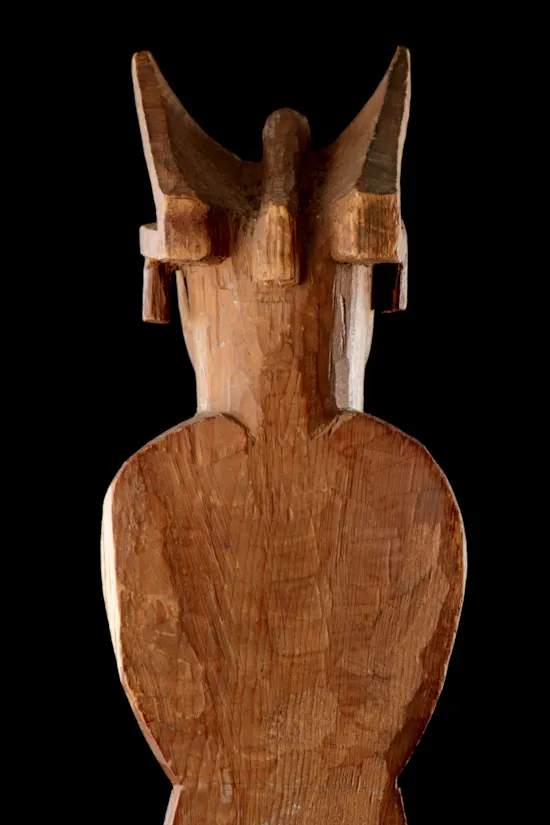
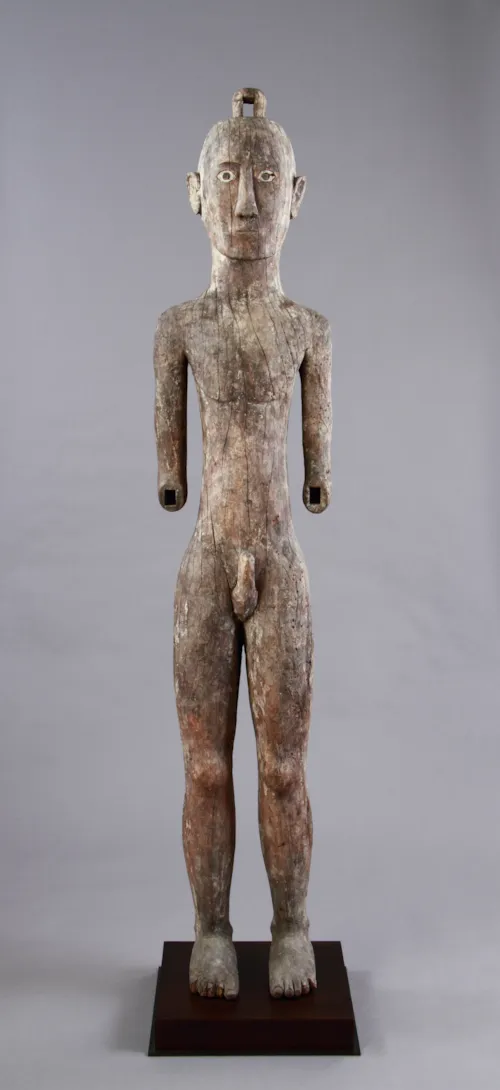
Depicting a Male and rarely seen Female Figure
Cedar-Wood, Quartz Pebble, polychrome
Dry aged patina
North Eastern Afghanistan once known as the ‘Hindu Kush’
19th Century
Size: male: 44cm high - 17⅓ ins high female: 42.5cm high - 16¾ ins high
Provence:
Ex Private collection
see: Finch and Co, catalogue number 33, autumn 2019, item number 81 for a rare equestrian figure from Kafiristan
cf: A seated female figure in the British Museum, As1930,1023.2 wearing a similar headdress / crown
Depicting a Male and rarely seen Female Figure
Cedar-Wood, Quartz Pebble, polychrome
Dry aged patina
North Eastern Afghanistan once known as the ‘Hindu Kush’
19th Century
Size: male: 44cm high - 17⅓ ins high female: 42.5cm high - 16¾ ins high
Provence:
Ex Private collection
see: Finch and Co, catalogue number 33, autumn 2019, item number 81 for a rare equestrian figure from Kafiristan
cf: A seated female figure in the British Museum, As1930,1023.2 wearing a similar headdress / crown
A Rare Pair of Kalasha Peoples Carved Funerary Figures
Depicting a Male and rarely seen Female Figure
Cedar-Wood, Quartz Pebble, polychrome
Dry aged patina
North Eastern Afghanistan once known as the ‘Hindu Kush’
19th Century
Depicting a Male and rarely seen Female Figure
Cedar-Wood, Quartz Pebble, polychrome
Dry aged patina
North Eastern Afghanistan once known as the ‘Hindu Kush’
19th Century
In the remote north-eastern corner of Afghanistan lies Kafiristan, known as ‘the land of the infidels or pagans’. This region of the Hindu-Kush was once the exclusive domain of a group of peoples related to the Indo-Europeans. Some believed they were descended from Alexander the Great and his Macedonian invaders. Herodotus mentioned their reputation for barbarity, while Marco Polo described them as ‘crafty idolators with a peculiar language’. Timur invaded their valleys but found the expedition unprofitable and soon left.
It was much later, in the last years of the 19th century, that Sir George Scott Robertson wrote ‘The Kafirs of the Hindu Kush’ (1896). In this book, he described the making and traditions surrounding the funeral effigy figures.
From Robertson’s account and that of other British visitors to Kafiristan before the Muslim conquest, it was evident that the people worshipped one god known as ‘Imra’, along with idols of ancient heroes whose intercession was believed to enable union with the divinity. Later known as ‘Zorastrians’, they did not bury their dead. Instead, they placed the body fully dressed in a large coffin and placed it on the side of a hill. Beside it, a wooden effigy, male or female, varied from a simple standing figure to one seated on a square throne or mounted on a horse. Occasionally, these cedar-wood sculptures were larger than life-size, but their shape was always simple and conventionalised, with the effigies of male ancestors given turbans.
All of these effigies were made as representations of deified ancestors and were once covered in polychromatic decoration. Sometimes, they would be set up on the top of a pole outside a village to warn strangers against trespassing.
The Kafir religion believed in a paradise called ‘Burry-Li-Boule’, accessible through sacrifices to the gods and hospitality. They observed four feasts annually, with goat sacrifices made in the spring and New Year, a practice similar to the Greeks and Romans.
Robertson’s account of a famous shrine of Imra is significant, as all traces of these temples and effigies vanished during the ruthless 1896 invasion and subsequent subjugation of the Kafirs, destroying their ancient religion. This devastated region was renamed ‘Nuristan’, ‘the Country of Light’.
The female figure from our pair is particularly rare, both figures were probably housed indoors, as a reminder of previous important family ancestors.
It was much later, in the last years of the 19th century, that Sir George Scott Robertson wrote ‘The Kafirs of the Hindu Kush’ (1896). In this book, he described the making and traditions surrounding the funeral effigy figures.
From Robertson’s account and that of other British visitors to Kafiristan before the Muslim conquest, it was evident that the people worshipped one god known as ‘Imra’, along with idols of ancient heroes whose intercession was believed to enable union with the divinity. Later known as ‘Zorastrians’, they did not bury their dead. Instead, they placed the body fully dressed in a large coffin and placed it on the side of a hill. Beside it, a wooden effigy, male or female, varied from a simple standing figure to one seated on a square throne or mounted on a horse. Occasionally, these cedar-wood sculptures were larger than life-size, but their shape was always simple and conventionalised, with the effigies of male ancestors given turbans.
All of these effigies were made as representations of deified ancestors and were once covered in polychromatic decoration. Sometimes, they would be set up on the top of a pole outside a village to warn strangers against trespassing.
The Kafir religion believed in a paradise called ‘Burry-Li-Boule’, accessible through sacrifices to the gods and hospitality. They observed four feasts annually, with goat sacrifices made in the spring and New Year, a practice similar to the Greeks and Romans.
Robertson’s account of a famous shrine of Imra is significant, as all traces of these temples and effigies vanished during the ruthless 1896 invasion and subsequent subjugation of the Kafirs, destroying their ancient religion. This devastated region was renamed ‘Nuristan’, ‘the Country of Light’.
The female figure from our pair is particularly rare, both figures were probably housed indoors, as a reminder of previous important family ancestors.
Ex Private collection
see: Finch and Co, catalogue number 33, autumn 2019, item number 81 for a rare equestrian figure from Kafiristan
cf: A seated female figure in the British Museum, As1930,1023.2 wearing a similar headdress / crown
see: Finch and Co, catalogue number 33, autumn 2019, item number 81 for a rare equestrian figure from Kafiristan
cf: A seated female figure in the British Museum, As1930,1023.2 wearing a similar headdress / crown
A Rare Pair of Kalasha Peoples Carved Funerary Figures

SOLD