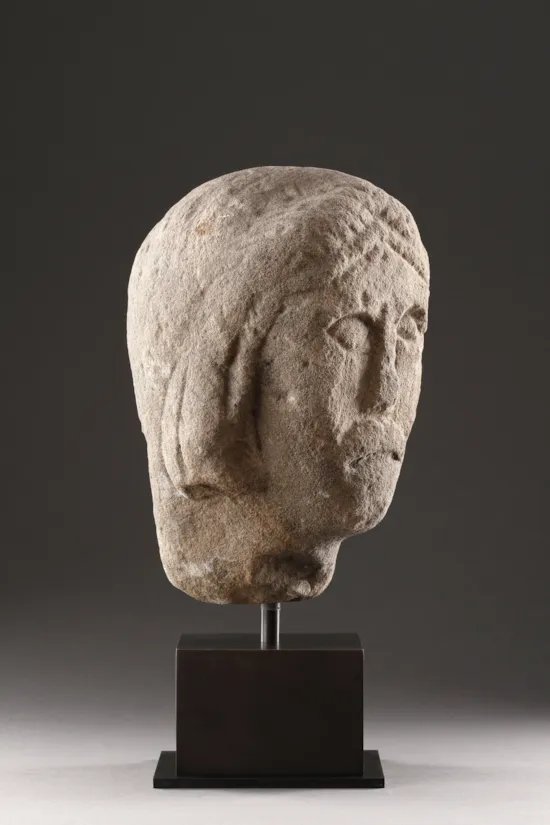
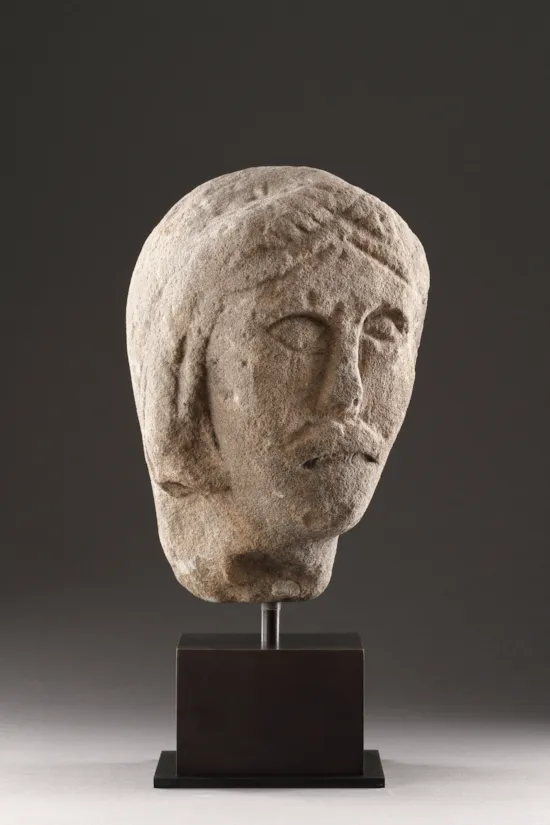
Celtic Crowned Head of a King
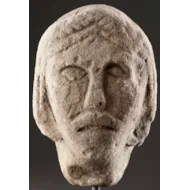
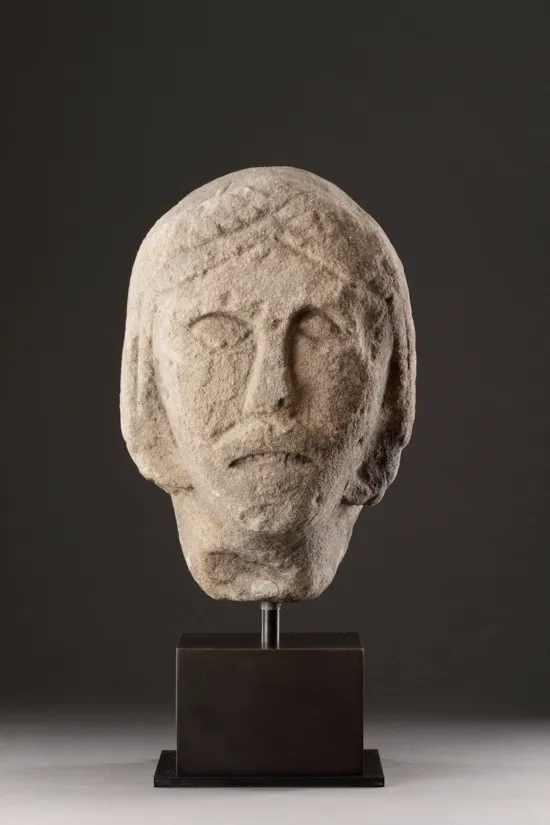
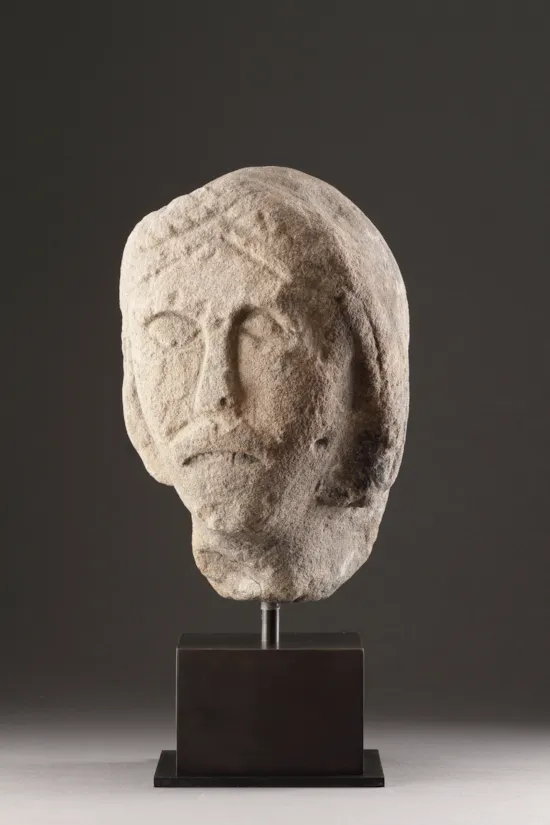
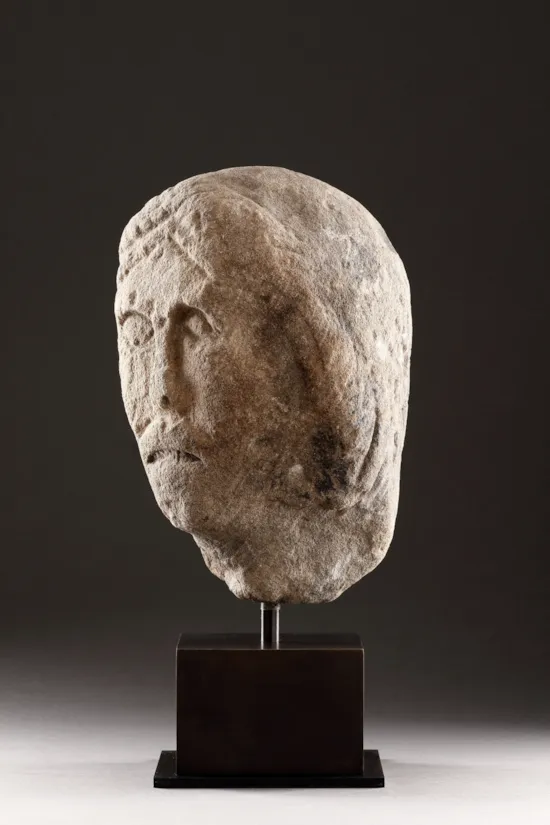
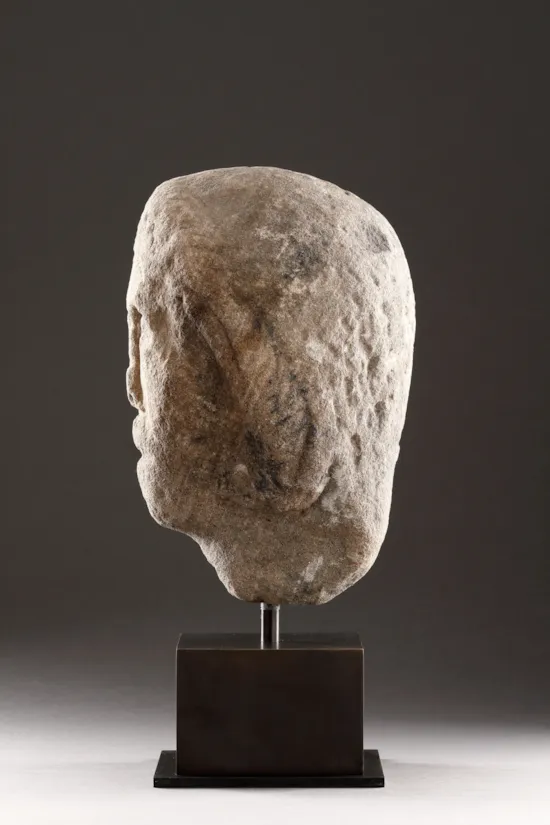
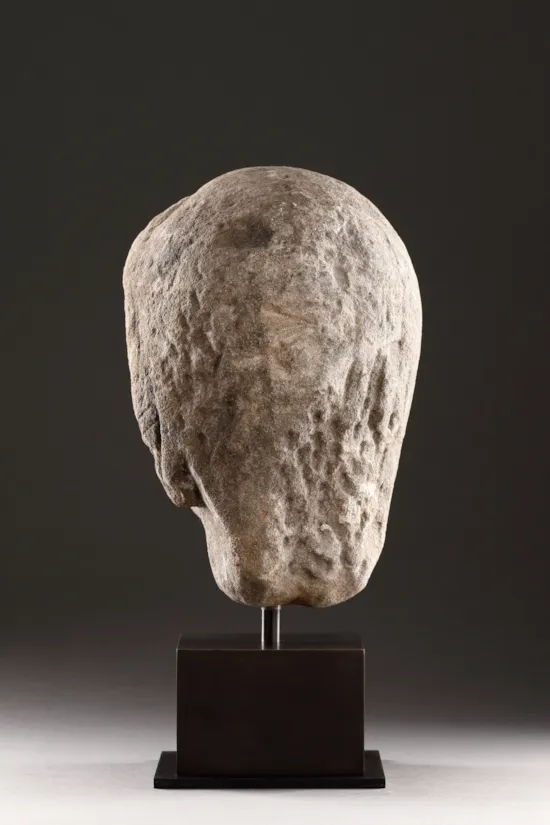
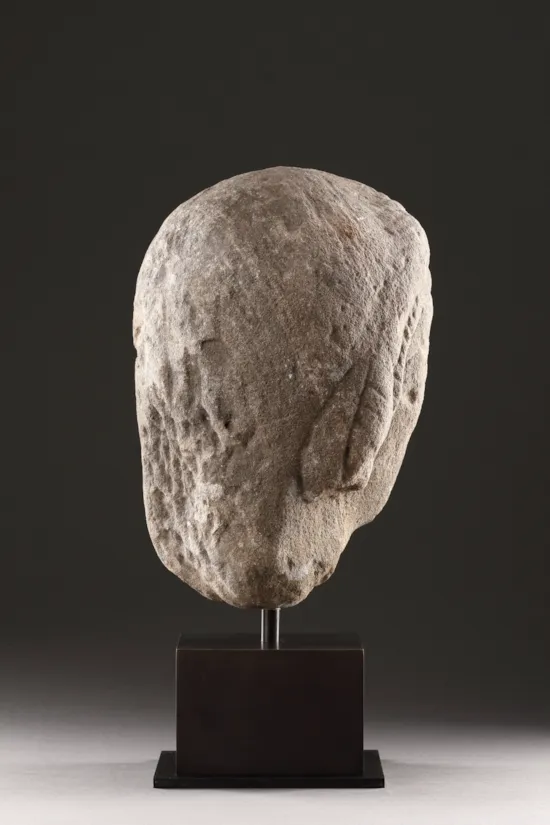
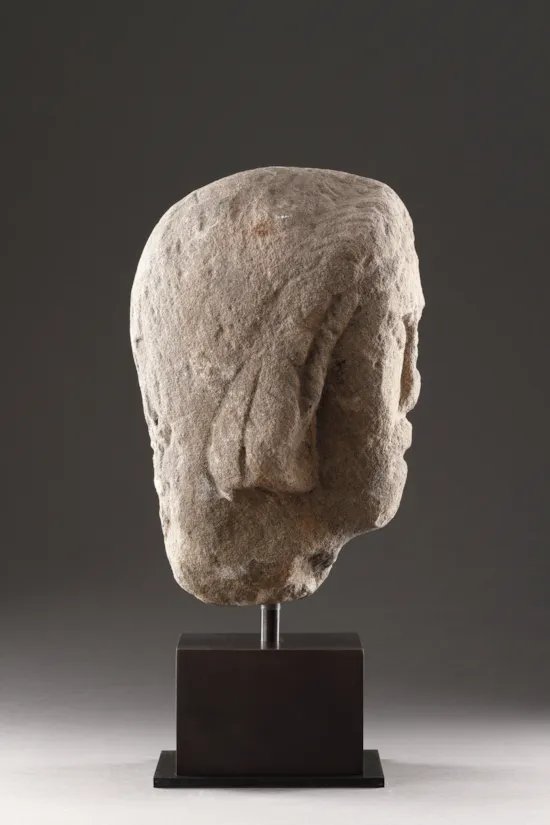
A Fine and Rare Celtic Head of King or ‘Crowned’ God
Sandstone
British
1st Century BC to 1st Century AD
Size: 29cm high - 11½ ins high / 42cm high - 16½ ins high (with base)
Sandstone
British
1st Century BC to 1st Century AD
Size: 29cm high - 11½ ins high / 42cm high - 16½ ins high (with base)
A Fine and Rare Celtic Head of King or ‘Crowned’ God
Sandstone
British
1st Century BC to 1st Century AD
Sandstone
British
1st Century BC to 1st Century AD
Celtic heads are commonly associated with shrines situated near springs or sacred groves. Found in Britain, Ireland, and Western Europe, they exhibit stylistic similarities that can be traced back to obscure origins in Central Europe during the late Bronze Age, approximately 1200 BC. Their final demise occurred in the Western Isles in the 6th century AD.
The significance of the head in Celtic iconography is evident in its frequent occurrence, albeit always displaying a subtle design. They convey tension and a potent energy. The human head held a sacred status, regarded as the essence of a person or deity, in our instance, that of a King, possessing talismanic properties and providing protection. Infused with the supernatural and evoking the otherworldly realm, the Celtic head embraces paradox and ambiguity.
The Celts were direct inheritors of Bronze Age Europe, with a Palaeolithic background. However, their art was not primitive; it was simply distinct and enigmatic. They possessed a unique, essentially abstract approach to their art, contrasting sharply with that of Greece and Rome, who perceived them as barbarians. Despite their current recognition as the most prominent cultural group in Western and Central Europe, less than 50 years ago, early Celtic art was described as ‘dark and uncanny, far from the lovable humanity and transparency of Greek Art’ (Paul Jacobsthal; Early Celtic Art, London, 1970).
Our crowned head, featuring a typical moustache, above ‘bearded teeth’. The inclusion of a crown is a rare occurrence.
The significance of the head in Celtic iconography is evident in its frequent occurrence, albeit always displaying a subtle design. They convey tension and a potent energy. The human head held a sacred status, regarded as the essence of a person or deity, in our instance, that of a King, possessing talismanic properties and providing protection. Infused with the supernatural and evoking the otherworldly realm, the Celtic head embraces paradox and ambiguity.
The Celts were direct inheritors of Bronze Age Europe, with a Palaeolithic background. However, their art was not primitive; it was simply distinct and enigmatic. They possessed a unique, essentially abstract approach to their art, contrasting sharply with that of Greece and Rome, who perceived them as barbarians. Despite their current recognition as the most prominent cultural group in Western and Central Europe, less than 50 years ago, early Celtic art was described as ‘dark and uncanny, far from the lovable humanity and transparency of Greek Art’ (Paul Jacobsthal; Early Celtic Art, London, 1970).
Our crowned head, featuring a typical moustache, above ‘bearded teeth’. The inclusion of a crown is a rare occurrence.
Bought at auction on the Welsh borders by a local family around 1950
Thence by descent
Private UK collection
Thence by descent
Private UK collection
Celtic Crowned Head of a King