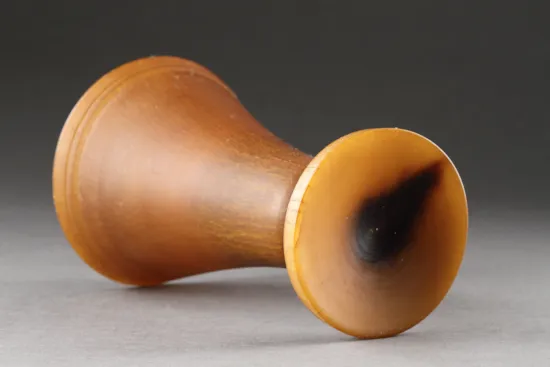
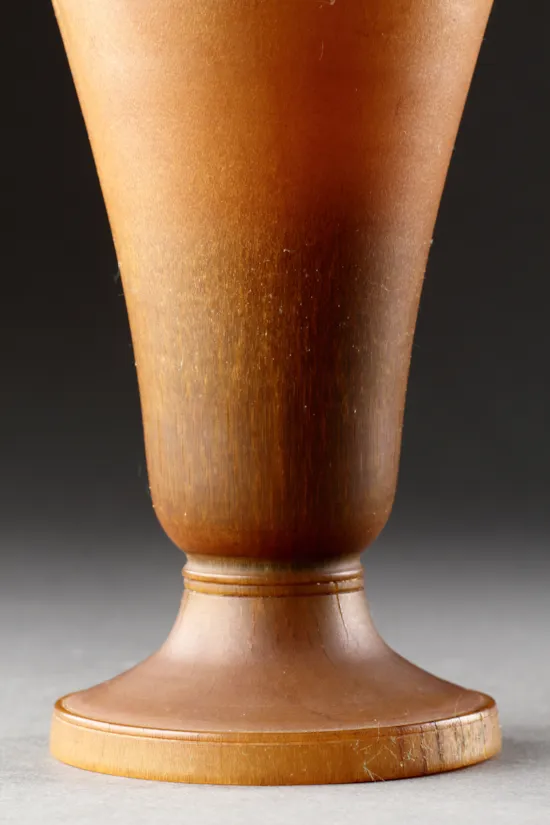
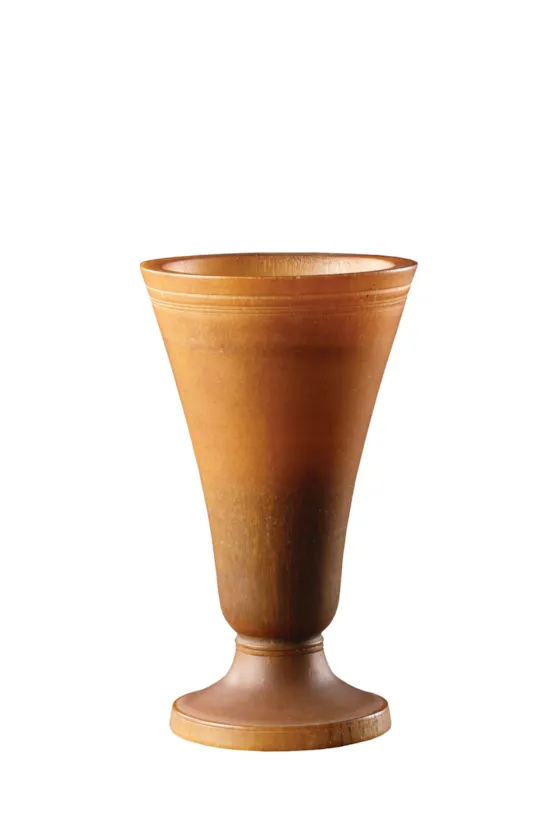
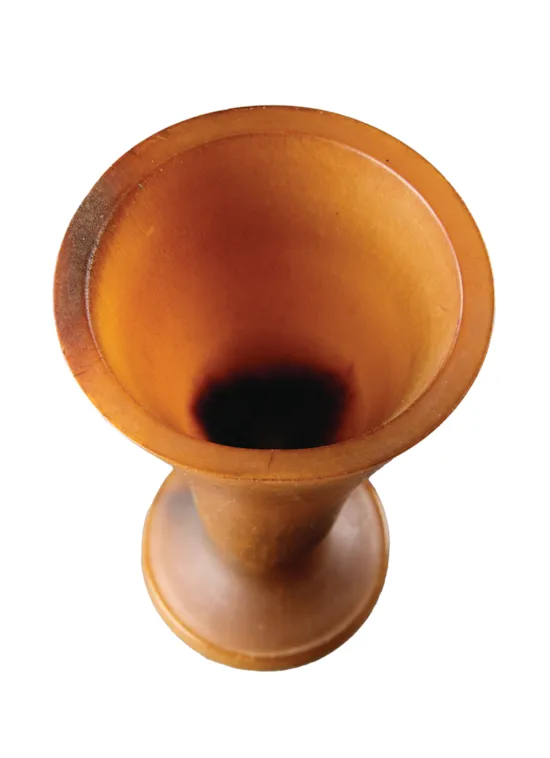
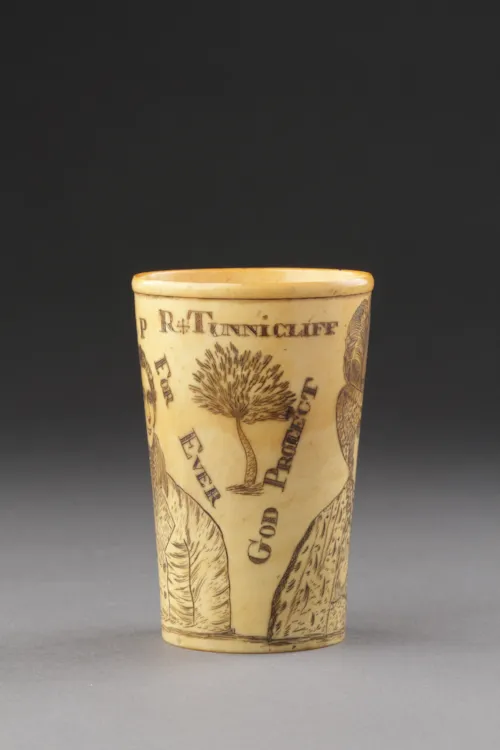
A Rare and Tall Turned Rhinoceros Horn Cup
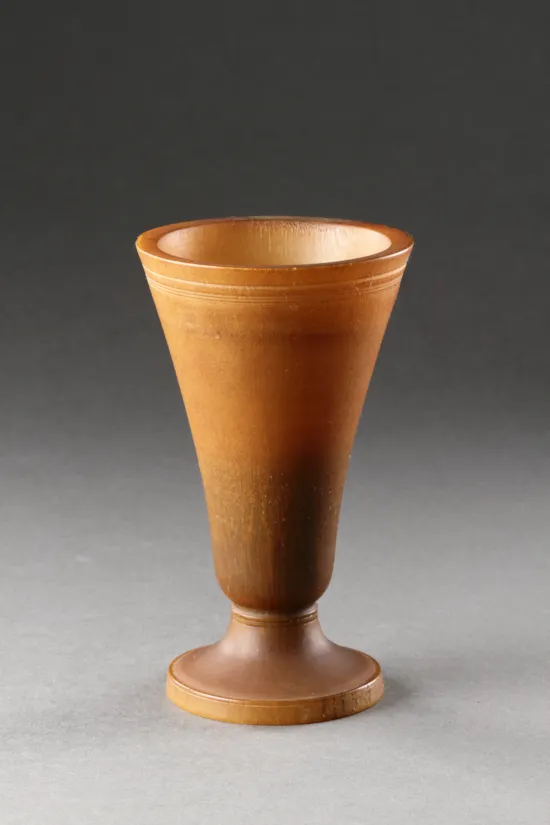
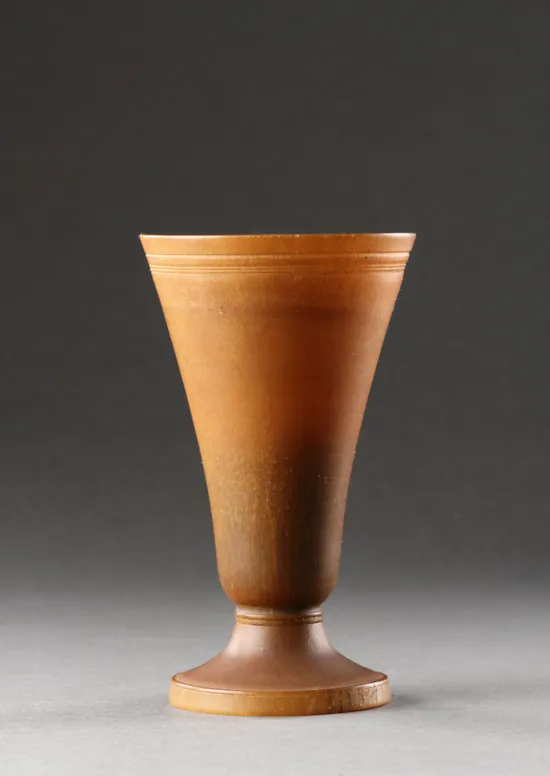
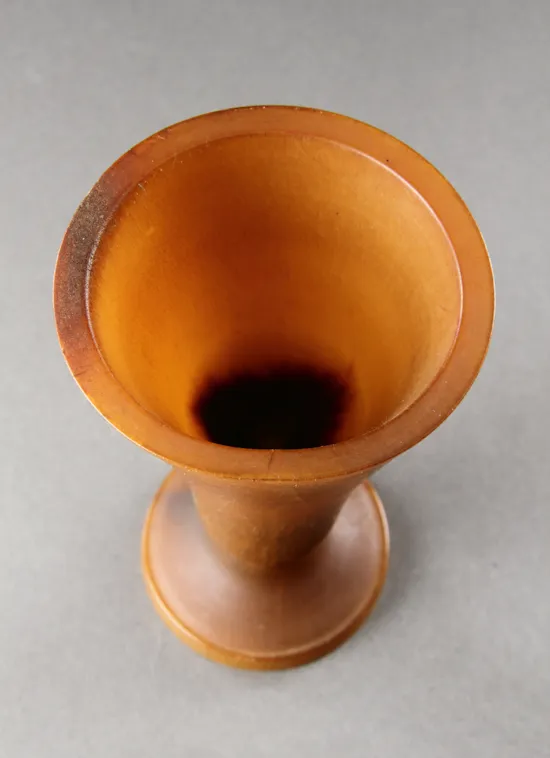
A Rare and Tall Turned Rhinoceros Horn Cup
Rhinoceros Horn
Mogul / India
17th / 18th Century
Size: 17cm high - 6¾ ins high
Rhinoceros Horn
Mogul / India
17th / 18th Century
Size: 17cm high - 6¾ ins high
A Rare and Tall Turned Rhinoceros Horn Cup
Rhinoceros Horn
Mogul / India
17th / 18th Century
Rhinoceros Horn
Mogul / India
17th / 18th Century
In the 16th century, Emperor Babur, the founder of the Mughal dynasty in North India, recorded in his diary that he had acquired a boat-shaped drinking cup crafted from the horn of a rhinoceros. This remarkable object was reportedly purchased over two centuries later by Sir Hans Sloane (1660 - 1753), whose extensive collection eventually formed the foundation of the British Museum.
Rhinoceros horn held immense value in the Middle and Far East, renowned for its purported medicinal properties as an antidote to both poison and melancholy, as well as its rarity and aesthetic appeal. Consequently, numerous European rhinoceros horn carvings were produced as a direct consequence of contact with these intricate carvings originating from China.
However, the exact arrival of vessels crafted from rhinoceros horn in Europe remains uncertain. The earliest documented evidence of such vessels dates back to the end of the 16th century, when a vessel adorned with rhinoceros-bone ornaments and silver was presented to the Governor of Portugal by a group of Japanese Christians traveling on a Portuguese ship. These traveler's visited southern Europe between 1584 and 1586.
In 1601, it is recorded that ‘un corno di rino ceronte’ was among several rare and precious articles taken to Beijing by the Jesuit missionary Father Matteo Ricci. Ricci likely believed he was presenting the Chinese Emperor with an object he had never encountered before. Unbeknownst to him, this rhinoceros horn was already familiar to the Wanli Emperor, and the beliefs associated with its magical powers and abilities had originated over a millennium earlier in China.
Rhinoceros horn held immense value in the Middle and Far East, renowned for its purported medicinal properties as an antidote to both poison and melancholy, as well as its rarity and aesthetic appeal. Consequently, numerous European rhinoceros horn carvings were produced as a direct consequence of contact with these intricate carvings originating from China.
However, the exact arrival of vessels crafted from rhinoceros horn in Europe remains uncertain. The earliest documented evidence of such vessels dates back to the end of the 16th century, when a vessel adorned with rhinoceros-bone ornaments and silver was presented to the Governor of Portugal by a group of Japanese Christians traveling on a Portuguese ship. These traveler's visited southern Europe between 1584 and 1586.
In 1601, it is recorded that ‘un corno di rino ceronte’ was among several rare and precious articles taken to Beijing by the Jesuit missionary Father Matteo Ricci. Ricci likely believed he was presenting the Chinese Emperor with an object he had never encountered before. Unbeknownst to him, this rhinoceros horn was already familiar to the Wanli Emperor, and the beliefs associated with its magical powers and abilities had originated over a millennium earlier in China.
Ex Private UK collection
Ex Finch and Co catalogue, number 39, item number 16
Ex Private collection
Ex Finch and Co catalogue, number 39, item number 16
Ex Private collection
A Rare and Tall Turned Rhinoceros Horn Cup